Tuff Shed Junior ADU Conversion: The Orange County Owner’s Guide
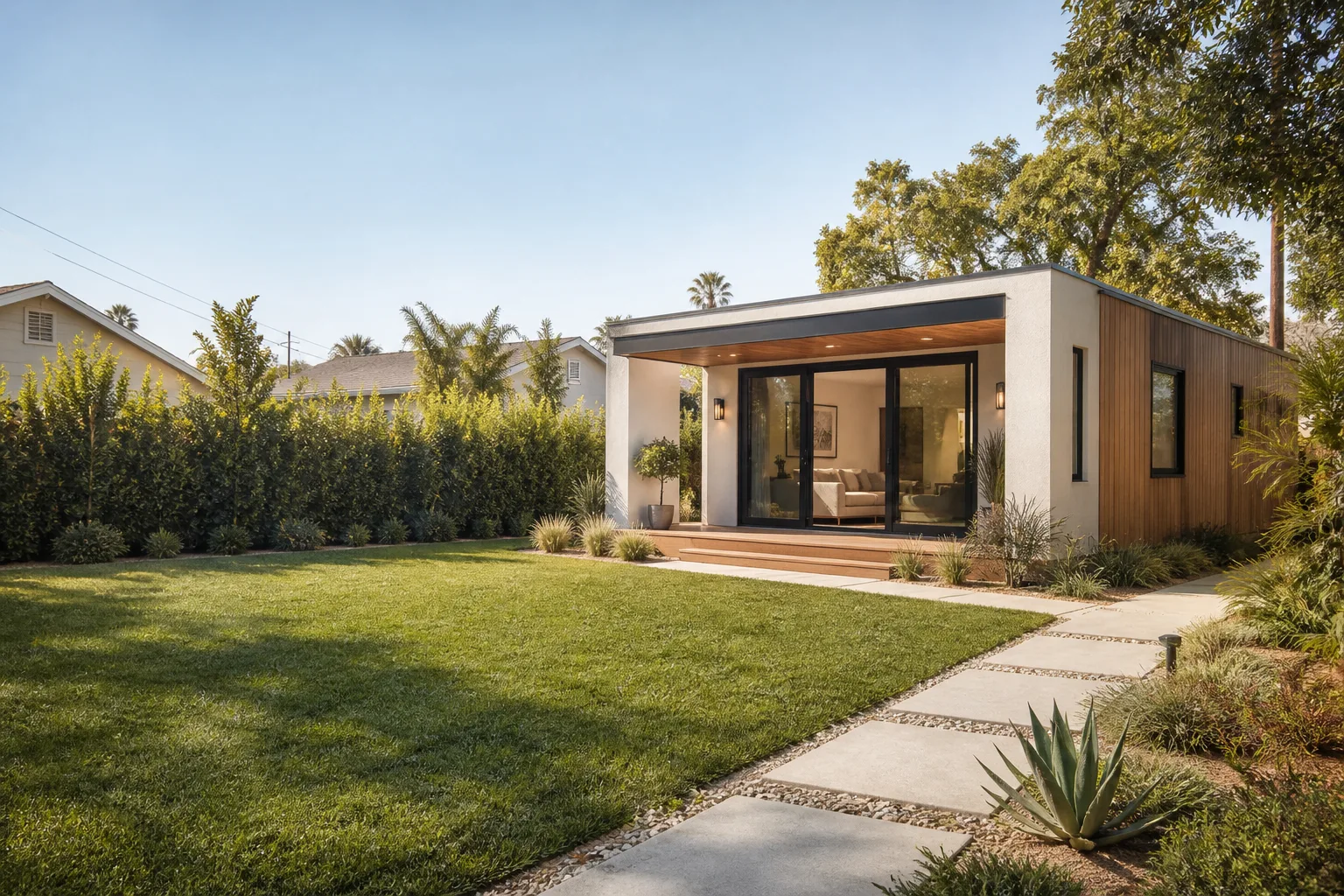
If you own a Tuff Shed and you’re weighing a Junior ADU conversion in Orange County, the short answer is this: a properly permitted JADU conversion of an existing Tuff Shed typically runs $85,000 to $145,000 here, including electrical, insulation, drywall, a bathroom, and a kitchenette. Most owners start researching after the shed has been standing for a few years and they realize it’s underused, or after a rental-property owner points out the income potential. We’ve done enough of these across Orange County to know exactly what holds up and what needs reinforcement before the first wire is pulled.
Key Takeaways:
- Tuff Shed frames are built for storage loads, not living loads. Most conversions need roof and wall reinforcement before interior work begins.
- Orange County city plan checkers treat a Tuff Shed conversion as a new dwelling unit, which means the foundation, not just the box on top, usually needs work.
- Written pricing before work starts is the rule on every conversion we do. No exceptions.
- You do not need to be the general contractor on this. You need a builder who has done it before.
Which Tuff Shed Models This Applies To
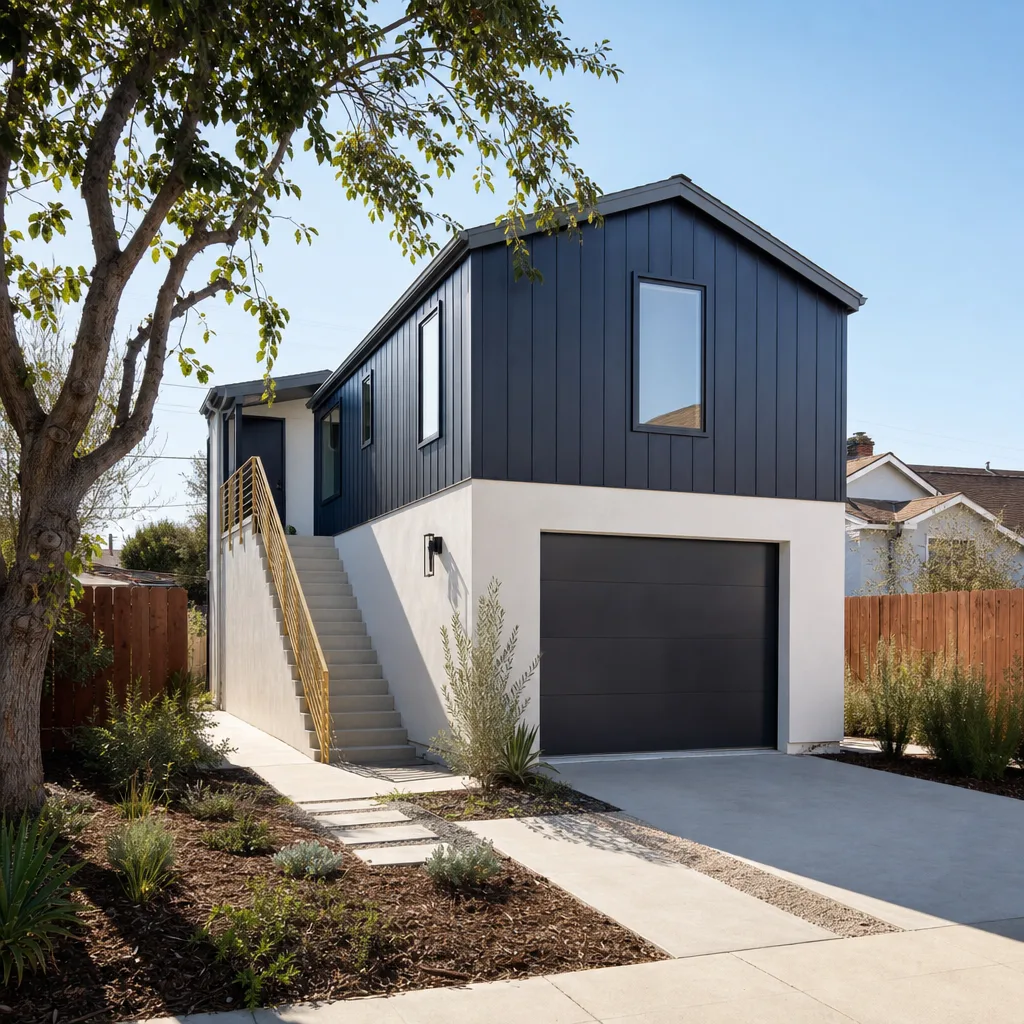
We get calls about every Tuff Shed line, but the conversion candidates we actually recommend in Orange County are the Premier Pro series and the Premier Ranch models, generally in the 10×16 to 12×24 footprint range. Those give you enough interior volume to meet California’s Junior ADU minimum of 150 square feet of livable space while leaving room for a three-quarter bath. The smaller Pro series and the barn-style units often fall short on ceiling height or wall framing depth, and by the time you retrofit them, you’ve spent more than starting with the right shell.
The identification step matters more than people expect. Look inside the shed on the ridge beam or a wall stud near the door. Tuff Shed stamps a serial number and build date there on most units made after 2010. That stamp tells you the wall framing specification, usually 2×4 on 16-inch centers for the Pro series, which is the baseline we need for insulation and shear wall upgrades. If you’re shopping used, a shed that has been sitting unanchored on skids for five years in Anaheim or Santa Ana sun needs a different scope than one that was placed on a proper gravel pad or slab from day one. We are an independent contractor, not a Tuff Shed dealer, and we’ll tell you honestly if the shell you own is worth converting or if you’d save money starting fresh with a factory ADU unit like Abodu, Cover, or Dvele.
Signs Your Tuff Shed Is a Good (or Bad) Conversion Candidate
Not every Tuff Shed is a good JADU. Here’s what tells us, on the first walkthrough, whether you’re sitting on a smart project or a money pit. Each of these is a real indicator we check in Orange County specifically, because our climate and soil conditions do things to sheds that dry inland climates don’t.
- Floor system sag or bounce. Tuff Shed floors are often built on treated skids or a light frame, not a code-grade foundation. If the floor deflects when you walk across it, you’ll need to pour or retrofit a proper foundation before anything else makes sense. In coastal Orange County, expansive clay soil can worsen this over time.
- Roof framing depth. Many Tuff Sheds use 2×4 rafters or trusses. Code for a dwelling in Orange County generally requires deeper roof framing to carry insulation and drywall, plus attic ventilation. If your roof framing won’t take R-38 insulation without sagging, the roof comes off or gets sistered.
- Wall stud condition and spacing. Pro series units usually have 2×4 walls, but we’ve seen warped or split studs on sheds that sat through several hot inland summers. Drywall on a twisted stud wall looks wrong no matter how good the finisher is, and shear requirements for a dwelling won’t pass plan check without upgrades.
- Door and window flashing failures. Tuff Shed factory flashing is designed for weather resistance, not dwelling-level waterproofing. We see the first leaks around the window trim after three or four rainy seasons. Once water is in the wall cavity, the conversion scope doubles.
- Skid or anchor condition. Sheds that were delivered on skids and never anchored to a foundation are common in backyards across Orange County. A skid-mounted shed is not a permitted dwelling structure, and converting one means lifting or moving the shed, which adds real cost and sometimes triggers setbacks (the required gap between the structure and your property line) that the original placement ignored.
Replacement Cost & What’s Included
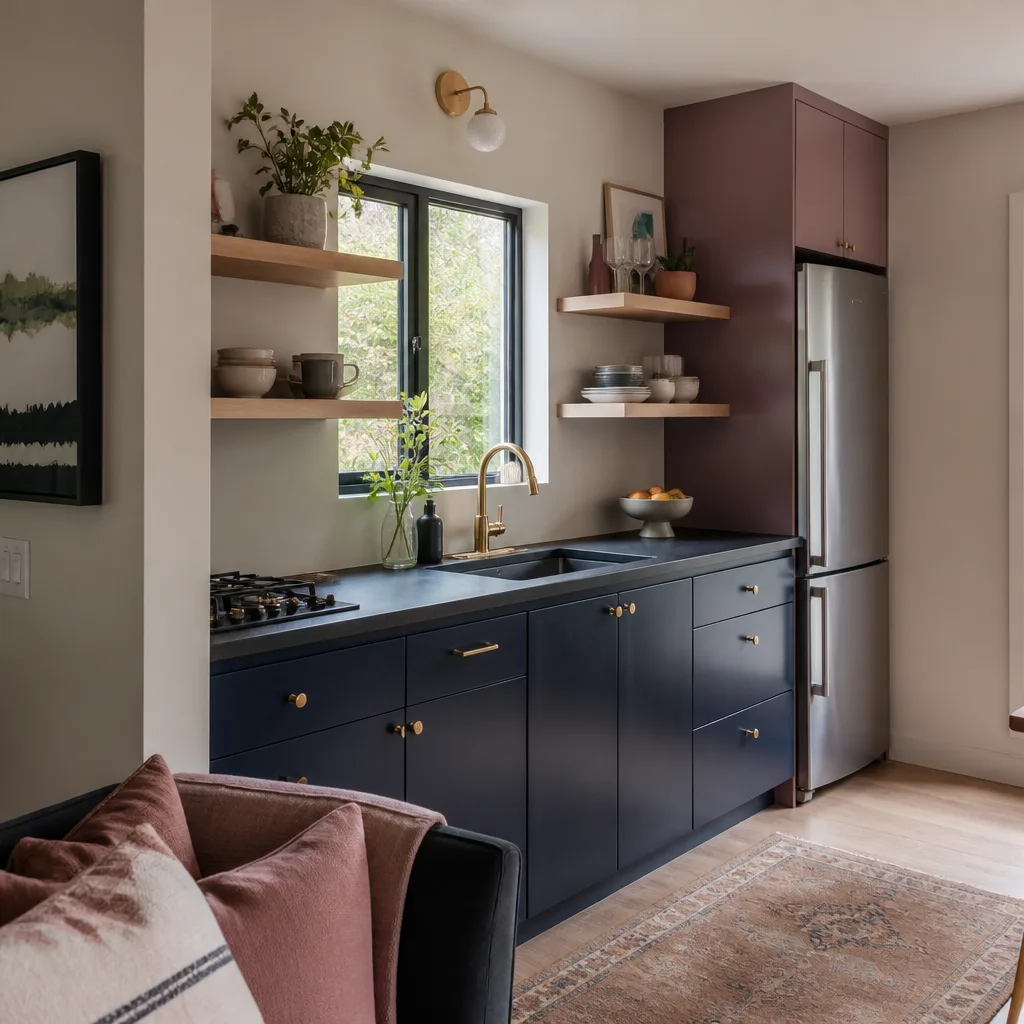
Let’s talk actual numbers for Orange County, because vague pricing wastes your time. For a JADU conversion of a structurally sound Tuff Shed in the 120 to 240 square foot range, a full permitted build runs $85,000 to $145,000. The spread is driven mainly by foundation work, electrical service upgrades, and whether your city requires fire sprinklers, which some Orange County jurisdictions do for JADUs. A simple interior finish-out with no foundation or service upgrade is not a real JADU and we won’t pretend it is.
That number includes architectural drawings and structural engineering, permits and city fees, foundation or slab work, framing reinforcement, insulation, drywall and paint, electrical rough and finish, plumbing for the bathroom and kitchenette, flooring, fixtures, and all final inspections. We also include real line-item pricing before work starts, not a handshake number that grows later. The written estimate is the price. The 365-Day Done Right Promise covers defects in workmanship for one full calendar year from project completion, and if something isn’t right, we send a crew back without charging you for the visit.
For context, if you’re comparing a conversion to a factory-built JADU from Abodu or Cover and you want an honest conversation about which path costs less per square foot after site work, call us and we’ll walk through it. Different products fit different lots, and we work with both approaches.
DIY or Call Us?
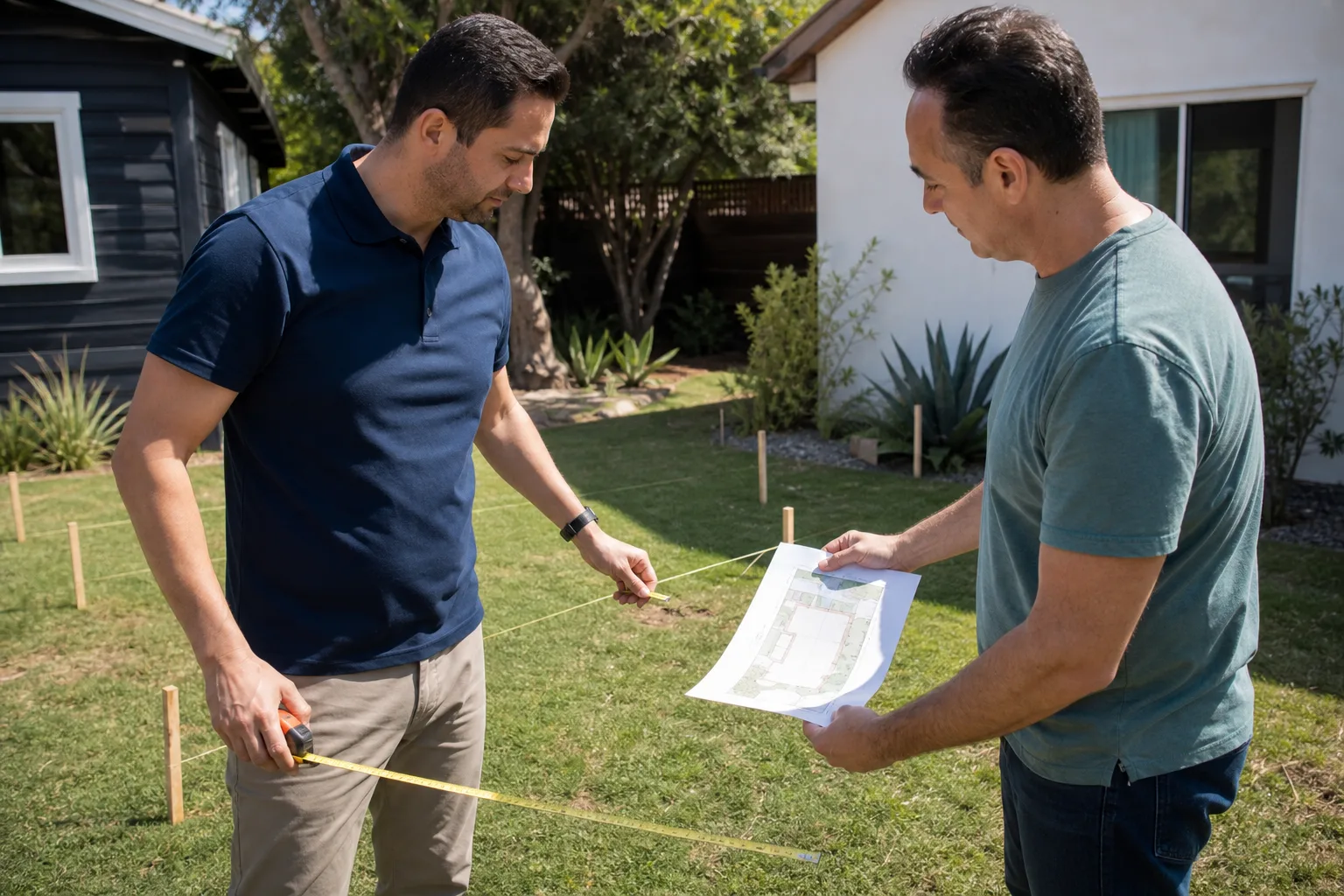
There is a narrow slice of a Tuff Shed JADU conversion that a handy owner can tackle: pulling off the factory trim to inspect the wall cavities, checking for rot, measuring your slab, or mapping the existing electrical if the shed has any. That’s all useful and we encourage it. But once you’re talking about roof structure, foundation work, or running new electrical service, this is no longer a weekend project and it’s not a tile-and-paint job.
Electrical panel work on an ADU carries a real shock and fire risk, and structural changes done wrong can fail a plan check or, worse, fail in a seismic event. Orange County is earthquake country, and a converted shed that started life as a storage box needs real shear design to behave like a dwelling. That is not a place to learn by watching videos. If you want us to look at your shed and tell you, honestly, whether it’s a conversion or a teardown, call (350) 209-9049 and we’ll schedule a walkthrough with a written scope and price to follow. No pressure, no change orders later.
FAQs
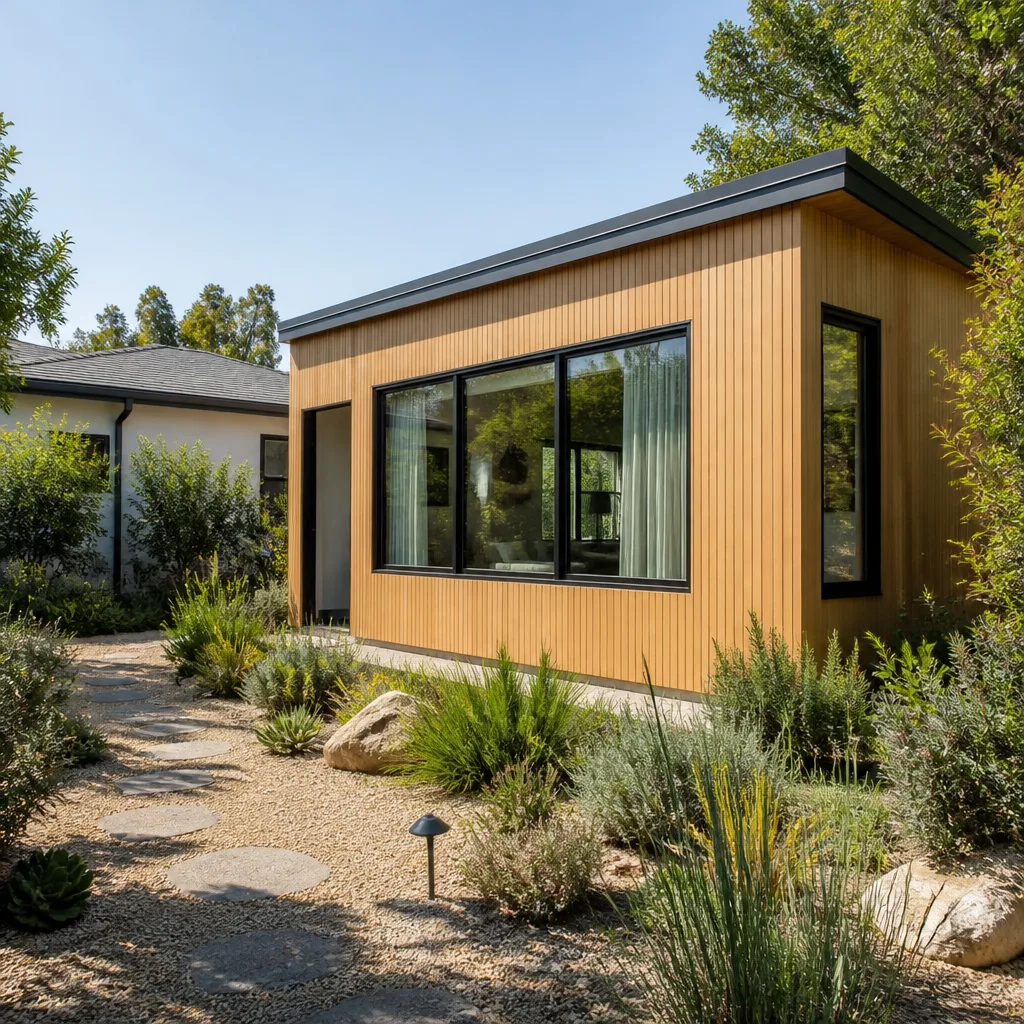
A typical conversion runs 10 to 16 weeks from permit submission to final inspection, depending on the city. Anaheim, Santa Ana, and Irvine all move at different speeds on plan check, and that’s often the longest single phase. We’ll give you a real schedule with the estimate, not an optimistic guess.
Yes, but it costs more. The shed has to come off the skids and go onto a code-compliant foundation, which usually means lifting or moving the structure and adding anchor bolts and holdowns. We’ve done it, and we’ll tell you upfront if your specific shed is worth that extra work. Call (350) 209-9049 for a site evaluation.
JADUs are permitted in most Orange County cities if the conversion meets building code for a dwelling, including foundation, insulation, electrical, and egress requirements. The shed’s original use as a storage structure doesn’t grandfather it into dwelling status, so plan on bringing the shell up to code rather than finishing over what’s there.
We stock the common structural and rough-in materials we use on most conversions, but doors, windows, fixtures, and finish materials are ordered per project based on your selections. Lead times on windows and doors in Orange County are running 3 to 6 weeks right now, and we factor that into the schedule before we start.
Written by Miles Hartwell, Owner, Sutton ADU Orange County at Sutton ADU Orange County, serving Orange County and nearby areas.