James Hardie New Detached ADU: The Orange County Owner’s Guide
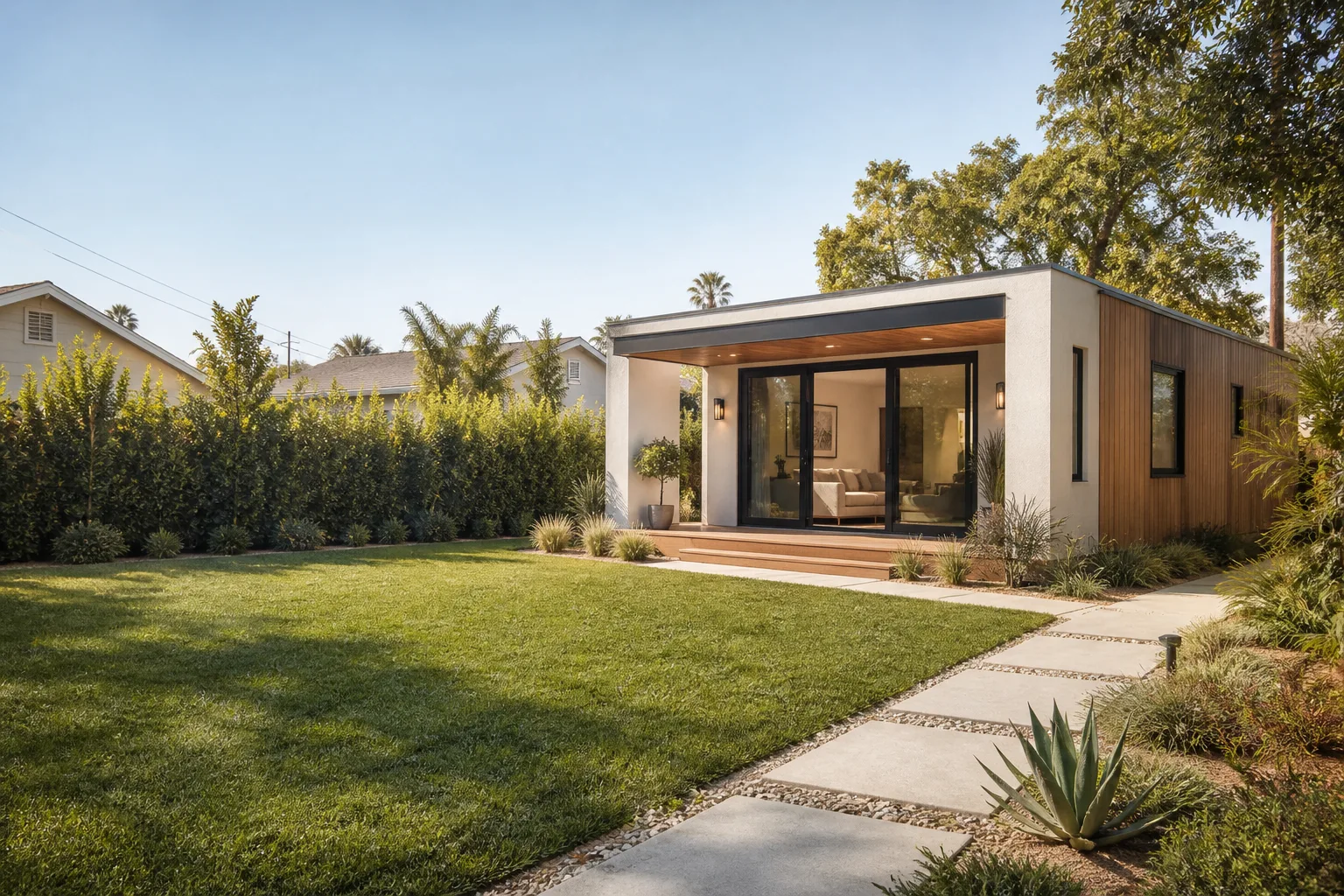
If you’re planning a new detached ADU in Orange County with James Hardie siding or panel systems, the installed cost typically runs $220,000 to $385,000 for a complete 400 to 750 square foot unit, including Hardie cladding, site prep, and finishes. We stock and install James Hardie fiber cement siding, trim, and panel systems on new detached ADUs throughout Orange County, with most full builds taking 4 to 7 months from permit approval to final inspection. The part most owners call us about isn’t actually a failed component yet, it’s the planning-stage question of which Hardie product will hold up best on their specific lot, and in Orange County that answer changes depending on how close you are to the coast.
Here’s what we’ve learned from years of running new detached ADU projects across Orange County: the Hardie product line you choose matters less than getting the installation details right. Flashing at the bottom edge, proper gap spacing between boards, and the right paint schedule for your microclimate are what determine whether your ADU still looks right in year seven or starts showing wear in year three. Most homeowners discover a problem not through a dramatic failure, but through a slow realization that something looks off, usually a board swelling or paint peeling earlier than it should.
Which James Hardie Models This Applies To
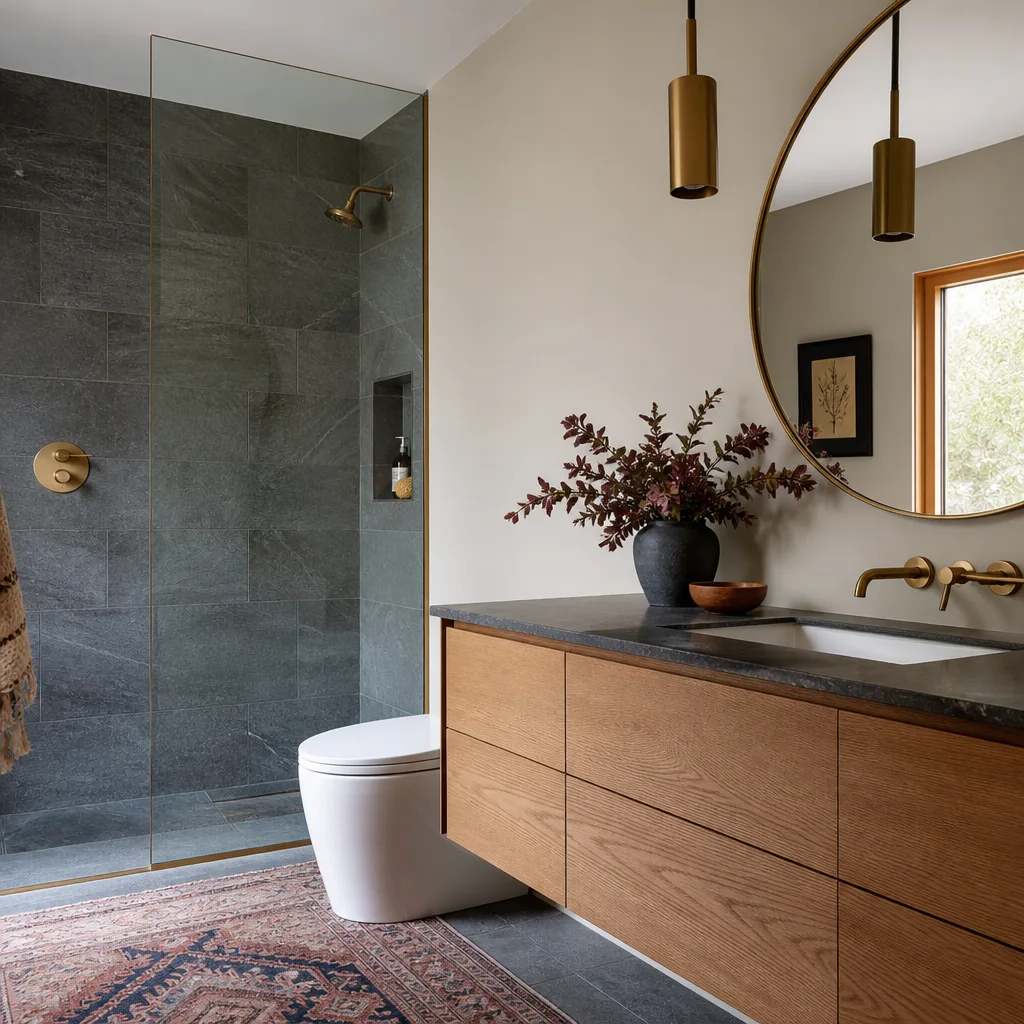
For new detached ADUs in Orange County, we work with the full James Hardie exterior line: HardiePlank lap siding (the classic horizontal board, available in 5.25-inch, 6.25-inch, 7.25-inch, and 8.25-inch exposures), HardiePanel vertical siding (most common on contemporary ADUs, 4×8 and 4×10 sheets), HardieTrim boards (the clean-lined accent pieces around windows and corners), and HardieShingle for accessory walls or gable ends. The product you need depends on your ADU’s design and your city’s fire code requirements.
One compatibility gotcha we see regularly in Orange County: if your ADU sits in a fire-prone hillside zone, several cities including Anaheim Hills, Orange Park Acres, and parts of San Juan Capistrano require specific fire-rated assemblies. James Hardie products carry a noncombustible fiber cement rating, but the specific product line and installation method must match what your city’s plan checker approved. We’ve had projects where swapping the originally specified 5.25-inch exposure for a 7.25-inch exposure on the fly created a plan check correction that added three weeks. Tell me what you need the space to do, and we’ll figure out the right way to build it, including the Hardie spec that clears your local requirements the first time.
When it comes to OEM versus aftermarket, James Hardie doesn’t really do aftermarket in the way appliance parts do. The siding, trim, and panel products are proprietary fiber cement formulations, and no third party makes a true equivalent. What varies is the trim and accessory hardware: corner boards, soffit panels, and flashing can be Hardie-branded or sourced from quality manufacturers like Tamlyn or Versatex. For Orange County humidity and sun exposure, we specify Hardie’s own trim in most cases because the color and texture match the siding exactly, and that matters more than people expect when you’re looking at the finished wall in direct sunlight.
Signs Your James Hardie New Detached ADU Is Failing
- Paint peeling at the bottom edge of siding boards – This is the most common issue we see in Orange County, and it’s almost always a water wicking problem. When HardiePlank sits too close to grade or the drip edge flashing wasn’t installed correctly, bottom boards absorb moisture and the paint lets go. The board itself may still be sound, but the constant moisture cycling will eventually cause swelling and softness.
- Swollen or soft boards near sprinkler heads – Hardie fiber cement is moisture resistant, not moisture proof. If your irrigation sprays directly onto the siding, repeated saturation will degrade the board over time. We see this most often on detached ADUs where the new landscaping went in after the structure and no one adjusted the sprinkler arcs.
- Gaps opening up at board seams – Hardie products expand and contract with temperature and humidity changes. In Orange County’s dry-summer, damp-winter cycle, improperly gapped boards will butt against each other and crack or bow. The correct gap is typically 1/8 inch at joints, and if the original installer laid them tight, the first big temperature swing exposes the problem.
- Dark streaks or staining running down from windows – This usually isn’t the Hardie product failing, it’s failed flashing above the window or door. Water gets behind the wall assembly and runs down the face of the siding, leaving mineral and dirt residue behind. The stain is a symptom; the real issue is water intrusion that will damage the sheathing and framing behind the Hardie.
- Cracking at fastener points – Hardie fiber cement is dense and unforgiving. If fasteners were overdriven or placed too close to the board edge during installation, stress cracks will appear, often within the first 18 months. This is an installation defect, not a product defect, and it’s exactly the kind of thing our 365-Day Done Right Promise covers on ADUs we build.
Replacement Cost & What’s Included
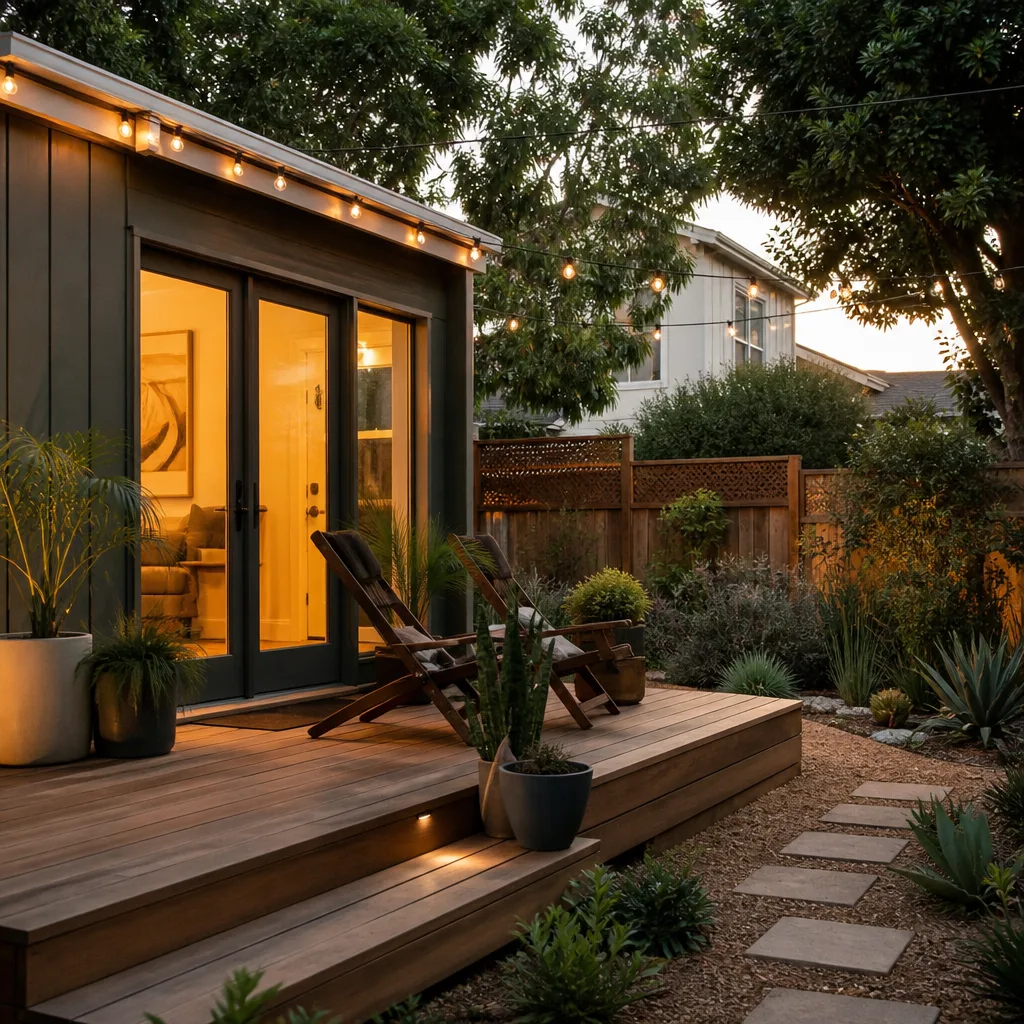
For a new detached ADU in Orange County, the James Hardie cladding portion of the project typically runs $28,000 to $52,000 depending on ADU size, product line, and trim complexity. That includes all Hardie siding or panel material, trim, flashing, house wrap, labor for installation, and paint. A full 750 square foot ADU with HardiePlank lap siding and a moderate amount of trim usually lands around $40,000 to $48,000 for the exterior package. If you’re replacing failed Hardie on an existing ADU, the cost is lower and depends on how much of the existing wall assembly is still sound.
What drives the price in Orange County specifically: scaffold requirements on two-story units, how much old material needs demolition and disposal, whether the wall sheathing behind the Hardie has water damage, and your city’s permit fees. Some Orange County cities like Newport Beach and Laguna Beach have higher permit costs for exterior work than inland cities like Santa Ana or Garden Grove. Every project we do gets a written price before any work starts, and that price doesn’t change unless you change the scope. If we replace Hardie and something isn’t right within a year, the 365-Day Done Right Promise means we return and make it right at no charge.
DIY or Call Us?
There are a few things you can check safely as a homeowner. Look at the bottom edge of your siding and confirm there’s at least a 6-inch gap between the board and any soil or mulch. Check that sprinklers aren’t hitting the walls. Look for cracked or missing caulk at window and door trim joints. These are diagnostic checks, not repairs, and they’ll tell you whether what you’re seeing is normal wear or a sign of a deeper installation problem.
What you should not DIY is removing and replacing Hardie products. Fiber cement cutting produces silica dust, which requires proper respirators and cutting methods. The boards are heavy and awkward, and an improper install on a second-story wall is how people get hurt. More practically, a botched repair on a Hardie system means water gets behind the wall, and by the time you see it inside, the framing has been rotting for months. If your ADU’s Hardie exterior needs work, call us at (350) 209-9049 and we’ll assess it honestly. If it’s a small fix, we’ll tell you that. If it needs a full replacement, you’ll get a written number before anyone picks up a tool.
FAQs
James Hardie fiber cement products carry a 30-year non-prorated warranty, and in Orange County’s climate you can reasonably expect 30 to 50 years of service life from properly installed HardiePlank or HardiePanel. The limiting factor here isn’t the product, it’s the paint. Plan to repaint every 7 to 12 years depending on sun exposure and proximity to salt air in coastal Orange County cities.
Yes, isolated damaged boards or panels can be removed and replaced without redoing the entire wall. If the damage is limited to a few boards and the underlying wall assembly is dry and sound, a targeted repair is often the right call. If the water intrusion is widespread or the original installation was defective across the whole wall, replacement is cheaper in the long run. Call (350) 209-9049 and we’ll tell you which situation you’re in, with no charge for the assessment.
For a typical 400 to 750 square foot detached ADU, a complete James Hardie exterior replacement takes 5 to 10 working days from tear-off to final paint, assuming no framing repairs are needed. Weather delays happen, and Orange County’s June gloom can slow exterior paint drying, but the structural work moves fast once the old material is off.
We keep HardiePlank lap siding in the most common Orange County exposures, HardieTrim boards in standard widths, and flashing accessories on hand at all times. Specialty products like HardieShingle or custom colors are ordered per project and typically arrive within a week. For full ADU builds, we also work with prefab brands like Abodu, Cover, and Dvele, and we’ll match their exterior systems to your Hardie siding needs if that’s the direction your project takes.
If you’re planning a new detached ADU in Orange County or your existing Hardie exterior needs attention, call us at (350) 209-9049. We’ll give you a straight answer, a written price, and a name and photo of exactly who’s showing up to your door.
Written by Miles Hartwell, Owner, Sutton ADU Orange County at Sutton ADU Orange County, serving Orange County and nearby areas.