Last updated October 15, 2026
ADU Cost Breakdown: The Orange County Homeowner’s Reference for 2026
Here’s a number that catches most Orange County homeowners off guard: two bids for a 500 sq ft detached ADU on the same street can legitimately differ by $130,000 or more. Same square footage, same city, same general floor plan. The gap doesn’t come from one contractor padding profit while another gives a fair price. It comes from five specific variables most estimates bury inside line items like “site work” or “MEP, as needed.” This guide and our Complete Guide to ADU in Orange County break down every real cost driver so you can compare bids on equal terms, spot the hidden line items before you sign, and know exactly what questions to ask when a number looks too good to be true. Orange County has its own set of rules, fees, and soil conditions that make ADU pricing here different from Los Angeles, San Diego, or anywhere else in California. We’ll cover all of it.
Quick Answer
A detached ADU in Orange County in 2026 typically costs between $180,000 and $320,000 for a 500 square foot unit, or roughly $360 to $640 per square foot before site work. Garage conversions run $120,000 to $200,000 for the same size, but the savings shrink once you factor in MEP upgrades and structural retrofits required by current code. The five variables that swing costs the most are lot slope, soil type, utility panel capacity, distance from the main house, and whether your contractor includes permit fees in the contract or leaves them as “owner’s responsibility.”
Table of Contents
- The Real Line-Item Cost Structure for Orange County ADUs
- The Five Variables That Create $150,000 Price Gaps
- Garage Conversion vs. Detached Build vs. Attached Addition: True Cost Comparison
- Hidden Costs That Appear After You Sign the Contract
- Fixed-Price vs. Cost-Plus Contracts: Which Protects You
- Permits, Fees, and Orange County’s Approval Process
- How Orange County Homeowners Actually Pay for ADUs
- Common Mistakes to Avoid
The Real Line-Item Cost Structure for Orange County ADUs
Every ADU estimate, whether it’s from a ADU Builders in Orange County or a general contractor testing the ADU market, breaks down into the same five buckets. The names vary from bid to bid, which is exactly why comparing them side by side feels impossible. Here’s what each bucket actually includes, with 2025 – 2026 Orange County price ranges for a typical 500 sq ft detached unit.
Permits, Fees, and Plan Approvals: $12,000 – $28,000
This covers architectural drawings, structural engineering, Title 24 energy calculations, city plan check fees, school district fees, and building permits. In Orange County, school district fees alone can hit $4 to $5 per square foot depending on the district. Some cities like Irvine and Newport Beach charge additional plan check deposits that get partially refunded. When a bid shows “permits included,” ask whether that means city fees only or city fees plus school fees, engineering, and Title 24-our ADU Permits, Codes & Inspections in CA: What You Need to Know explains exactly what to verify. The gap between those two interpretations is frequently $8,000 to $15,000.
Site Prep and Foundation: $18,000 – $45,000
This bucket causes more bid confusion than any other. Site prep includes clearing, grading, utility trenching, drainage, and foundation work. On a flat lot with good soil in a city like Fountain Valley or Westminster, site prep might stay under $20,000. On a sloped lot in Anaheim Hills or San Clemente, retaining walls, caissons, and deeper footings push this bucket to $40,000 or higher. We’ve seen bids where one contractor priced a standard slab-on-grade foundation while another assumed piers and grade beams because the lot had a 4-foot drop across the build area. Both were “right” based on their assumptions. Only one was honest about the risk.
Framing and Shell: $28,000 – $42,000
Wall framing, roof structure, windows, exterior doors, house wrap, and roofing. A simple rectangular footprint with a gable roof sits at the low end. Anything with multiple corners, a shed roof with clerestory windows, or oversized sliding glass doors moves toward the top. Orange County’s wildfire zones in the eastern hills add requirements for ember-resistant vents and Class A roofing, which costs $2,000 to $5,000 more than standard materials.
MEP (Mechanical, Electrical, Plumbing): $30,000 – $55,000
This is the bucket where garage conversions and detached ADUs diverge most sharply, which we’ll get into below. For a detached unit, MEP includes running a new subpanel, trenching electrical lines from the main house or utility connection, plumbing supply and drainage lines, a mini-split HVAC system, an electric water heater or tankless unit, and all fixture installation. The distance from your main house to the ADU site drives this number more than anything else. Every foot of trench adds roughly $25 to $45 in combined electrical, plumbing, and data line costs when you account for trenching, conduit, and restoration.
Finishes: $35,000 – $70,000
Flooring, cabinets, countertops, tile, paint, lighting fixtures, appliances, and bathroom fixtures. A builder-grade finish package with laminate counters and vinyl plank flooring lands at the low end. Solid wood cabinets, quartz counters, and a tile shower push toward the top. Appliance allowances matter here too. Some bids include a $4,000 appliance package; others assume you’ll buy your own and list a zero. Neither is wrong, but a bid that’s $5,000 lower because appliances are missing from the allowance isn’t actually lower.
Quick reference table for a 500 sq ft detached ADU in Orange County:
- Permits and fees: $12,000 – $28,000
- Site prep and foundation: $18,000 – $45,000
- Framing and shell: $28,000 – $42,000
- MEP: $30,000 – $55,000
- Finishes: $35,000 – $70,000
- Total range: $123,000 – $240,000 plus contractor overhead and profit of 15 – 25%, which puts the realistic all-in range at $180,000 – $320,000
The Five Variables That Create $150,000 Price Gaps
When two bids for the same footprint come back $100,000 apart, the explanation is almost always hiding in one of these five places. Understanding them turns you from someone who’s guessing into someone who can read a bid the way a builder does.
1. Lot Slope
A flat lot in Garden Grove builds with a standard slab foundation and minimal excavation. A lot with 18 inches of fall across the build area in Yorba Linda or Anaheim Hills requires stepped footings, additional concrete, and possibly a retaining wall. Every foot of elevation change adds real money. A 3-foot drop can add $15,000 to $25,000 in foundation and grading costs before you touch framing. If one bid includes a soils report and the other doesn’t, the cheaper bid is guessing.
2. Soil Type
Orange County has two distinct soil realities. Coastal areas tend toward sandy, well-draining soils that build easily. Inland areas, particularly north and east Orange County, sit on expansive clay that swells when wet and shrinks when dry. Expansive clay moves enough to crack slabs and distort framing if the foundation isn’t designed for it. Builders working inland Orange County regularly specify deeper footings, post-tension slabs, or both. That adds $8,000 to $18,000 to a 500 sq ft ADU foundation. A contractor who doesn’t mention soil conditions in their bid either doesn’t know your area or doesn’t plan to upgrade the foundation, which leads to cracks and disputes later-one of the ADU Warning Signs: A Orange County Homeowner’s Reference Guide we recommend reviewing before you sign.
3. Utility Panel Capacity
Older Orange County homes built in the 1960s and 1970s often have 100-amp panels. That was fine for a single-family house forty years ago. Add an ADU with a mini-split, water heater, kitchen appliances, and lighting, and you need another 60 to 100 amps of capacity. If your main panel can’t handle it, you’re looking at a panel upgrade ($3,000 to $6,000), a subpanel run to the ADU ($2,000 to $5,000 depending on distance), or both. Solar-equipped homes may face additional interconnection requirements with the local utility. This is one of the most common surprise costs in Orange County ADU projects because it only becomes clear after an electrician loads up the existing panel and does the calculation.
4. Distance From the Main House
Detached ADUs need water, sewer, electrical, and sometimes gas lines run from the main structure. A unit built 15 feet from the existing house needs minimal trenching. A unit built 80 feet away, behind a pool or through a mature root system, needs considerably more. Trenching through roots, concrete, or hardscape can triple the cost per foot. Every 10 feet of additional separation typically adds $2,500 to $4,500 across all utilities combined when you include trenching, bedding material, conduit, and restoration of landscaping or hardscape.
5. Permit Fee Treatment in the Contract
Some Orange County contractors list permit fees as a reimbursable line item outside the contract price. Others include them in the fixed price. Neither approach is dishonest, but a $180,000 bid that excludes $18,000 in fees is actually a $198,000 bid. When you’re comparing quotes, circle any line that says “owner’s responsibility,” “by others,” or “reimbursable” and add those numbers back in. This single issue accounts for more bid confusion than any other factor we see in Orange County ADU projects.
Garage Conversion vs. Detached Build vs. Attached Addition: True Cost Comparison
Conventional wisdom says garage conversions are the cheapest way to add an ADU. The square-footage math supports that: you already have walls, a roof, and a foundation. But Orange County code requirements have a way of eating those savings, and in some cases eliminating them entirely.
Garage Conversion: $120,000 – $200,000 for 400 – 500 sq ft
Garage conversions start with structural advantages. The shell exists. The roof exists. The foundation exists, though it may need reinforcement. What most people don’t anticipate is the MEP cost. Garages built before 1990 rarely have adequate electrical service, any plumbing, or insulation. You’re not adding MEP to a blank canvas; you’re retrofitting it into a space that was never designed for it. Cutting concrete for a bathroom drain, upgrading the panel, adding insulation to walls and ceiling, and replacing the garage door with a proper wall and windows routinely runs $40,000 to $70,000 in Orange County. Add a requirement to replace the driveway if the conversion eliminates covered parking (some cities require it), and your “cheap” conversion crosses $180,000.
Detached New Build: $180,000 – $320,000 for 500 sq ft
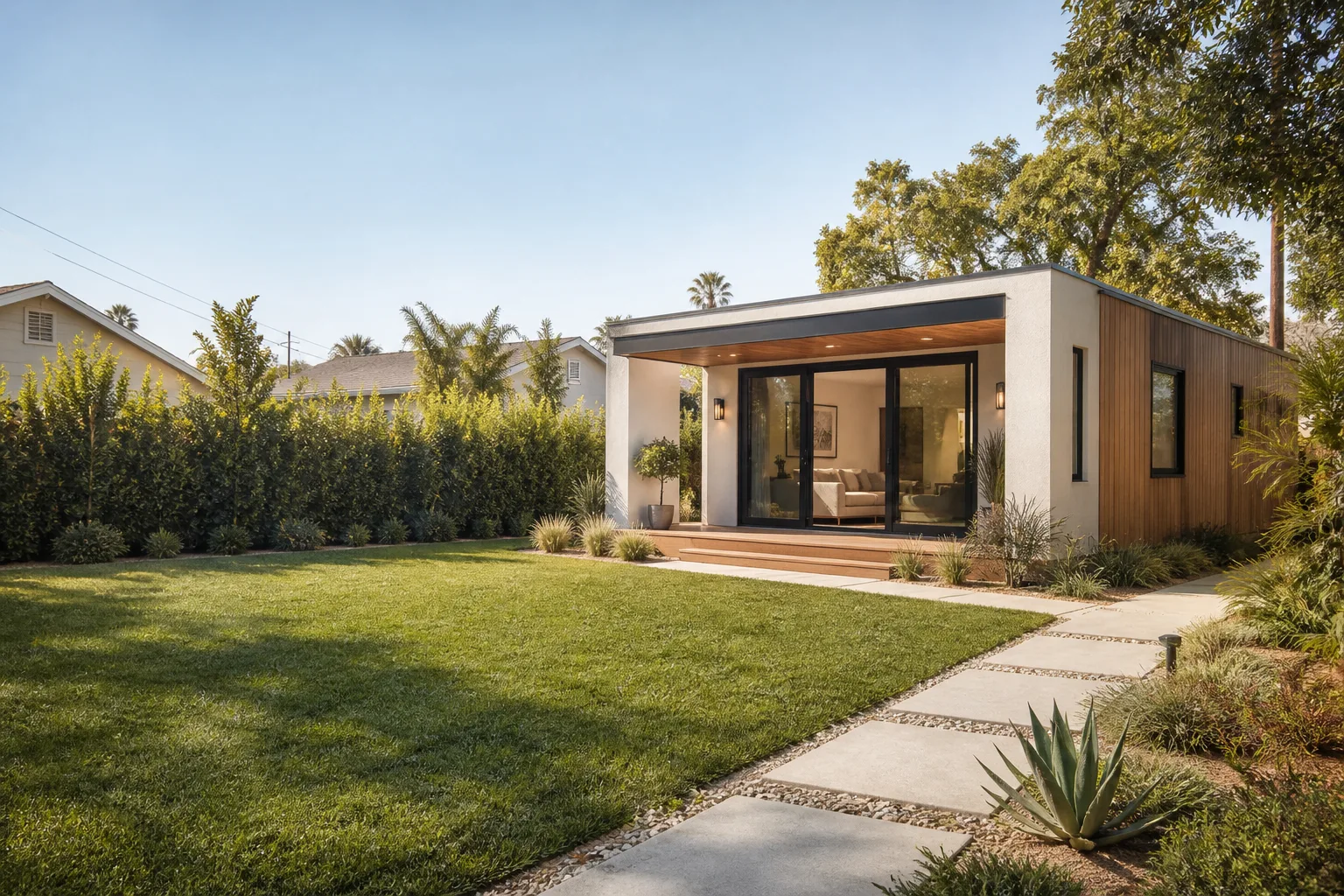
A detached ADU costs more per square foot than a garage conversion, but you get more control. You’re not working around an existing structure’s limitations. The floor plan fits the site instead of fighting it. You also avoid the parking replacement trigger in most Orange County cities, since a new detached unit doesn’t remove existing covered parking. For homeowners who want a rental unit, the detached ADU also offers better privacy and sound separation from the main house.
Attached Addition ADU: $160,000 – $280,000 for 500 sq ft
Attaching the ADU to the existing house saves on one wall, some foundation work, and utility runs compared to a fully detached unit. But you’re now cutting into your existing roofline and tying into the main structure, which triggers structural engineering, possible shear wall upgrades, and connection details that a standalone box doesn’t require. The savings over a detached build typically run $20,000 to $40,000, which is meaningful but not transformative. The bigger tradeoff is privacy and future flexibility. An attached ADU is harder to rent as a fully separate unit, and some Orange County homeowners later regret losing the separation.
Prefab and modular systems are changing some of these economics. We work with several product lines, including Abodu, Cover, and Dvele, and each has different strengths depending on your site. A prefab unit can reduce on-site construction time and weather exposure, but site preparation, foundation, and utility connection costs remain the same regardless of whether your walls arrive on a truck or get stick-framed on site. Prefab doesn’t eliminate the five cost drivers above; it just moves some of the work off-site.
Hidden Costs That Appear After You Sign the Contract
Orange County has fee structures that surprise even experienced builders, and several of them only surface after the contract is signed and the plans head to the city. Here are the ones we see catch homeowners most often.
School District Fees
California law allows school districts to collect fees on new residential square footage. In Orange County, these fees vary by district and generally run $3 to $5 per square foot for ADUs under 750 sq ft, with higher rates for larger units. A 500 sq ft ADU in a district charging $4.50 per foot owes $2,250 before the city issues the permit. Some bids include this; many don’t. Ask whether “permit fees included” means school fees too.
Fire Sprinkler Requirements
California requires fire sprinklers in all new residential construction, including ADUs, unless the primary residence is exempt and the ADU is detached with no additional fire risk. In practice, most Orange County cities require sprinklers in attached ADUs and garage conversions, while detached units under 500 sq ft may be exempt depending on local ordinance. If your plans trigger the sprinkler requirement, budget $4,000 to $8,000 for the system. This often doesn’t appear in early estimates because it’s determined during plan check.
Traffic Impact and Development Fees
Some Orange County cities charge transportation impact fees on new residential units regardless of size. The amount varies widely: $1,500 to $6,000 is the range we’ve seen across the county in recent years. These fees are non-negotiable and owed at permit issuance. They’re also easy for a contractor to miss if they don’t build regularly in your specific city.
Utility Connection and Upgrade Fees
When the ADU connects to your existing water and sewer lines, the local utility may charge connection fees, inspection fees, or capacity charges. If your sewer lateral needs replacement because it’s the original clay pipe from 1965, that’s another $5,000 to $15,000 depending on depth and distance to the city main. We’ve seen Orange County projects where the sewer lateral replacement cost more than the framing package.
Landscaping and Drainage Restoration
Construction disturbs your yard. The contract may include “restoration” but that word has a lot of wiggle room. Two inches of topsoil spread over a trench is restoration. Replanting, re-sodding, and reconnecting your irrigation is also restoration. They cost very different amounts. Before signing, ask what “restoration” includes in writing. If you have hardscape, mature trees, or a pool between the main house and the ADU site, get specific about access routes and protection measures.
Fixed-Price vs. Cost-Plus Contracts: Which Protects You
Two contract types dominate Orange County residential construction. Each has virtues and risks, and the right choice depends partly on your project and partly on the labor market conditions when you build.
Fixed-Price Contracts
A fixed-price contract locks the scope and price before work starts. You know the total. The builder absorbs cost overruns if materials spike or a trade takes longer than expected. The tradeoff is that the builder prices in contingency risk. In Orange County’s current labor market, that contingency often adds 10 to 15 percent to the bid. You’re paying for certainty, and for many homeowners, especially those building an ADU for rental income with a defined budget, that premium is worth it. The fixed price works as protection only if the scope is defined clearly. A vague allowance for “standard finishes” inside a fixed-price contract is a change order waiting to happen.
At Sutton ADU Orange County, we put a written price in front of every homeowner before any work begins. That’s the Sutton ADU Orange County home standard: no surprise invoices, no scope creep passed silently to the bill. If something in the scope changes during construction, the price change is documented and agreed to before the work proceeds. That’s how a fixed price should function.
Cost-Plus Contracts
Cost-plus means you pay the actual cost of labor and materials plus a markup, usually 15 to 25 percent. You only pay for what gets used. If material prices drop mid-project, you benefit. If a trade takes two extra weeks, you pay for two extra weeks of time. Cost-plus works well for projects where the scope is genuinely hard to define up front, like major remodels inside an existing structure with unknown conditions. For ADUs, where the scope is generally knowable, cost-plus transfers construction risk to the homeowner. In a tight labor market with trade labor in high demand, that risk is real.
Our recommendation for Orange County homeowners: if a contractor can’t give you a fixed price for an ADU, ask what specifically they can’t define, and check our more guides & resources for additional vetting questions. The answer tells you a lot. A builder who builds ADUs regularly knows what a 500 sq ft unit costs. If they’re hedging, they may not have enough ADU-specific experience, or they’re protecting themselves from their own unknowns. Neither is a reason for you to absorb that risk.
Permits, Fees, and Orange County’s Approval Process
California state law mandates that cities approve ADU permit applications ministerially, meaning without discretionary review, as long as the project meets objective standards. In Orange County, that’s mostly true in practice, but the process still moves at different speeds depending on your city.
Step 1: Pre-Application Research (1 – 2 weeks)
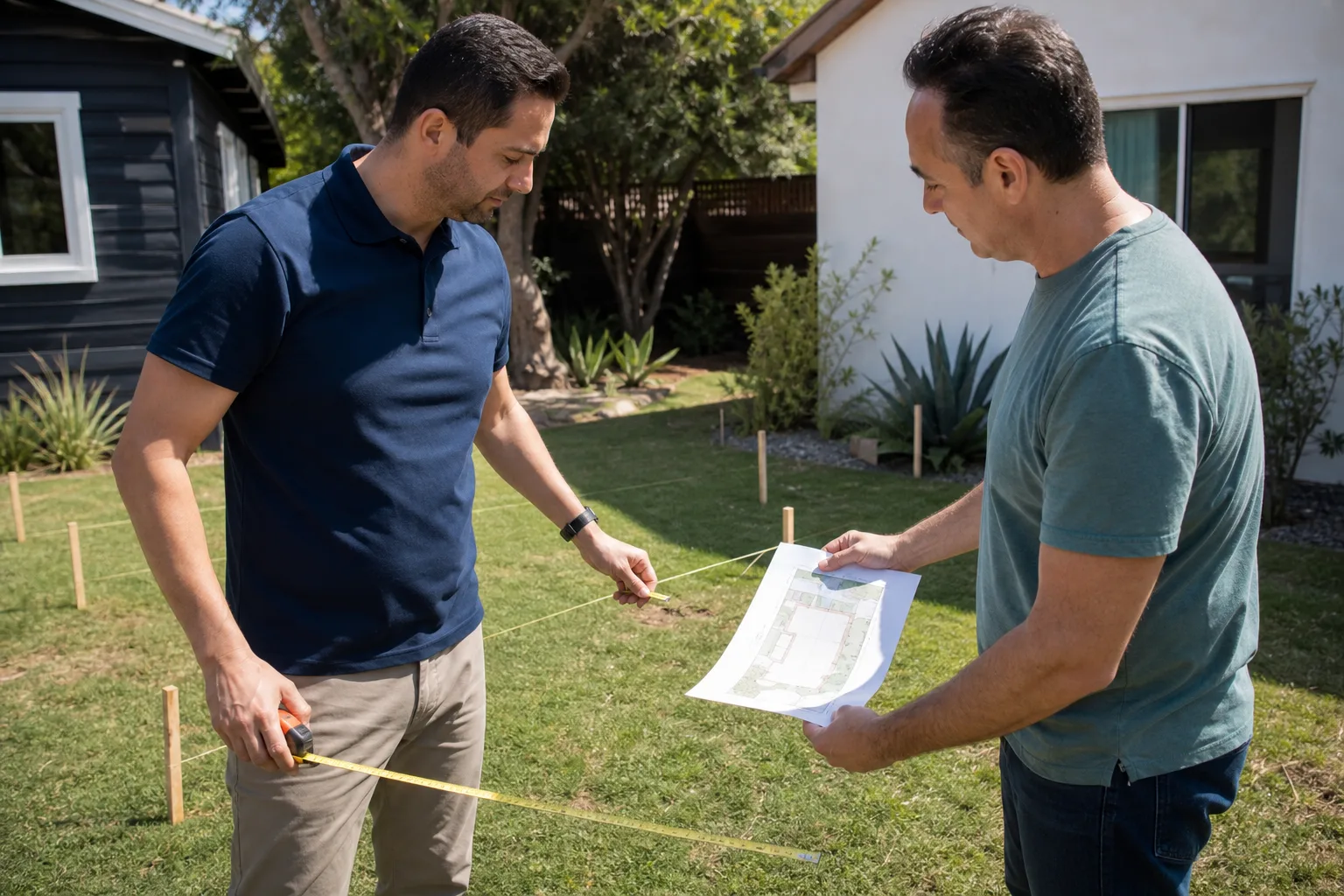
Check your lot’s zoning, setback requirements, and any HOA restrictions before you spend money on plans. Some Orange County HOAs still attempt to restrict ADUs despite state law limiting their authority. A Home Addition Contractor in Orange County with local experience can tell you who’s building ADUs in your neighborhood and what the local planning counter is actually enforcing, which sometimes differs from what the municipal code says.
Step 2: Architectural and Engineering Plans (3 – 6 weeks)
Your designer or architect produces construction drawings. Your structural engineer designs the foundation and framing. Your Title 24 consultant handles the energy compliance documentation. If you’re using a prefab system like Abodu or Cover, the manufacturer provides the structural drawings and the time here compresses significantly.
Step 3: City Plan Check (4 – 12 weeks)
Orange County plan check times vary widely. Smaller cities may turn around a straightforward ADU plan check in 3 to 4 weeks. Larger cities like Santa Ana or Anaheim can take 8 to 12 weeks or longer depending on current workload. Resubmittals add time. A plan that comes back with seven comments takes another 2 to 4 weeks to correct and resubmit, then more time to re-review. Budget 2 to 4 months from submittal to issued permit as a realistic Orange County timeline.
Step 4: Construction (4 – 8 months for detached, 3 – 6 for conversion)
Detached ADUs take longer due to foundation work, utility trenching, and the full construction sequence from dirt to finish. Garage conversions skip some of that and can move faster. Weather in Orange County is favorable for construction most of the year, which helps, but trade availability in the current labor market is often the real scheduling constraint.
Step 5: Final Inspection and Certificate of Occupancy (1 – 3 weeks)
The city inspects the completed work against the approved plans. If everything passes, you get your certificate of occupancy and the unit is legal to rent. Any failed inspection adds time and potentially cost if the correction requires rework.
How Orange County Homeowners Actually Pay for ADUs
ADUs get financed through the same channels as other major home improvements, with a few ADU-specific twists. Most Orange County homeowners use one of these five paths.
Cash-out refinance: If you bought before 2021 and sit on meaningful equity, a cash-out refinance can fund the entire ADU at mortgage rates, which remain lower than construction loan rates. The tradeoff is resetting your primary mortgage rate, which may not be attractive if you’re sitting on a sub-4 percent rate from 2020 or 2021.
HELOC: A home equity line of credit draws funds as needed during construction, so you only pay interest on what you’ve spent. Rates are variable and tied to the prime rate. HELOCs work well for staged construction projects because you’re not borrowing the full amount on day one.
Construction loans: Banks and credit unions offer ADU-specific construction loans that convert to permanent financing after completion. These typically require more documentation and have higher closing costs than a refi or HELOC, but they keep your existing first mortgage intact.
Prefab financing programs: Companies like Abodu and Cover have partnered with lenders to offer financing packages that bundle the prefab unit, site work, and installation into a single loan. If you’re considering a prefab ADU, ask the manufacturer about their financing partners early in the process.
Cash: Orange County homeowners with sufficient savings sometimes pay cash, particularly for smaller garage conversions. The advantage is speed: no lender, no appraisal, no closing costs. The disadvantage is tying up liquid capital in a structure you can’t sell separately from the house.
Your financing choice affects your budget in one way that matters for bid comparison: lenders require a defined scope and often a fixed-price contract before they’ll fund. If you’re planning to finance, you need a builder who can deliver a written price before work starts. That requirement pushes you toward the fixed-price model we discussed above, which is generally the better position for the homeowner anyway.
Common Mistakes to Avoid
- Comparing bids without normalizing scope: One bid includes permits, appliances, and a panel upgrade. Another doesn’t. Put every bid through the same five-bucket structure above before comparing totals. A $15,000 gap that’s explained by a missing panel upgrade isn’t a price difference; it’s a scope difference.
- Signing a contract with vague allowances: “Allowance for finishes: $25,000” without a defined finish schedule is an invitation for change orders. Get the allowance tied to specific materials, brands, and quantities before signing.
- Skipping the soils report: In inland Orange County on expansive clay, building without a soils report is gambling with your foundation. The $3,000 to $5,000 report is the cheapest insurance you’ll buy on the whole project.
- Forgetting about parking replacement: If your garage conversion eliminates required covered parking, some cities require you to rebuild it elsewhere on the lot. That’s $8,000 to $15,000 for a new carport or covered structure, and it’s rarely in the initial bid.
- Assuming prefab means turnkey: Prefab units like Abodu and Cover reduce on-site framing time, but you still need site work, foundation, utility connections, and finishing. The prefab company’s price quote is not the total project cost.
- Ignoring the contractor’s local permit history: A builder who’s never pulled a permit in your city will learn the process at your project’s expense. Ask for references from ADU projects in your specific Orange County city, not just the county generally.
- Prioritizing the lowest bid over the clearest scope: The cheapest bid that’s missing $30,000 in required work is the most expensive bid on the table. A Room Addition Contractor in Orange County who fixes the price and defines the scope in writing protects you from this trap.
When to Call a Professional
Some parts of ADU planning are genuinely DIY-able: researching your city’s ADU ordinance, walking your lot to think about placement, talking to neighbors who’ve built ADUs. But the moment you’re ready to get real numbers, you need a builder who knows Orange County’s specific conditions. Call a professional when you’re comparing bids and can’t tell what’s included in each one, when your lot has slope or drainage questions, when your panel is older than 25 years, or when you need a written price you can take to a lender. Sutton ADU Orange County offers free estimates throughout Orange County. Call (350) 209-9049 and we’ll walk your lot, answer your questions, and hand you a written price before any work begins.
Frequently Asked Questions
Detached ADUs in Orange County run $360 to $640 per square foot in 2026, which puts a 500 sq ft unit at $180,000 to $320,000 all-in. Garage conversions run lower on a per-square-foot basis ($300 to $500) because the shell already exists, but MEP retrofits and structural upgrades close much of that gap. Call (350) 209-9049 for a specific quote on your lot, estimates are free.
Usually yes, but not always. A 400 to 500 sq ft garage conversion in Orange County typically runs $120,000 to $200,000, while a detached ADU of the same size runs $180,000 to $320,000. However, if the conversion triggers parking replacement requirements, extensive plumbing work through an existing slab, or a full electrical panel replacement, the gap narrows considerably. Get both options priced before deciding.
School district fees ($3 to $5 per square foot), fire sprinklers when triggered ($4,000 to $8,000), traffic impact fees ($1,500 to $6,000 depending on city), sewer lateral replacement if your existing line is old ($5,000 to $15,000), and landscape restoration beyond basic trench fill. A written contract that lists every fee and allowance prevents most of these from becoming surprises.
Plan for 8 to 14 months from initial planning to certificate of occupancy. The city plan check phase runs 4 to 12 weeks depending on your city’s current workload, and construction takes 4 to 8 months for a detached unit or 3 to 6 months for a garage conversion. Prefab systems like Abodu and Cover compress the on-site construction timeline but not the permit and site work phases.
Most Orange County cities require a soils report for new detached ADUs, and even where it’s not required, we strongly recommend one on inland lots. Expansive clay in north and east Orange County can shift foundations that weren’t designed for it. A $3,000 to $5,000 soils report is the cheapest protection against a cracked slab.
It shouldn’t, if the contract is written correctly. A fixed-price contract with a defined scope, specific allowances, and a written change order process protects you from price creep. At Sutton ADU Orange County, every project gets a written price before work begins, and any change is documented and agreed to before the work proceeds. Call (350) 209-9049 if you want to see what a properly structured ADU contract looks like.
The Bottom Line
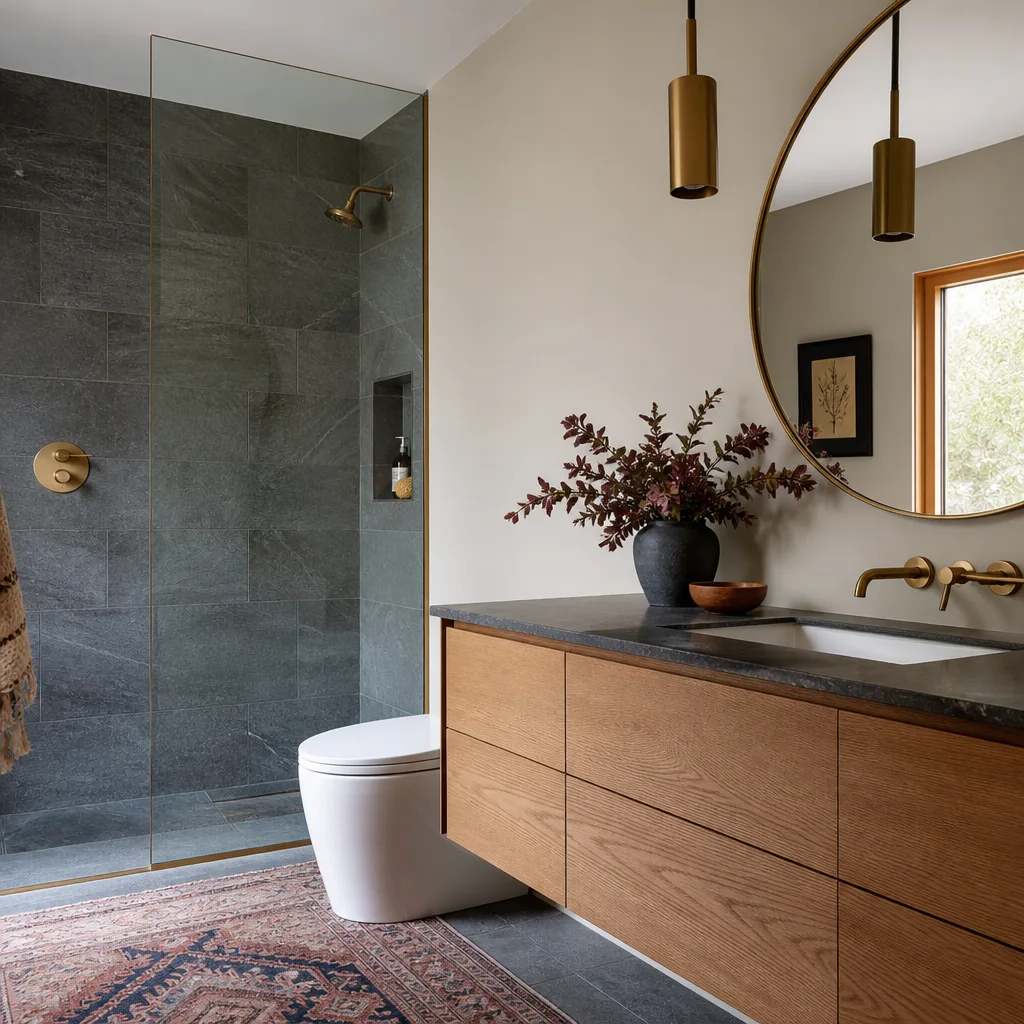
Orange County ADU pricing in 2026 is predictable once you understand the structure behind the number. A 500 sq ft detached ADU costs $180,000 to $320,000 all-in. The variance comes from slope, soil, utilities, distance, and contract structure, not from mystery pricing. Garage conversions look cheaper on paper but carry retrofit costs that close the gap. The single best protection for any Orange County homeowner is a fixed-price contract with every fee, allowance, and scope item defined in writing before work starts. When you’re ready to get real numbers for your lot, call Sutton ADU Orange County at (350) 209-9049. We’ll walk the site, answer every question on this page in the context of your specific property, and deliver a written price that stands up.
Written by Miles Hartwell, Owner at Sutton ADU Orange County, serving Orange County since 2006.