James Hardie Room Addition Contractor in Orange County: What to Know First
James Hardie room additions in Orange County typically run $220 – $390 per square foot, depending on whether you’re extending off the back of the house or building up over a garage. As an independent James Hardie service provider, Sutton ADU Orange County matches the new addition to your existing Hardie cladding so the transition looks original, not patched on. Most room additions with Hardie siding take 10 – 16 weeks from permit submittal to final walkthrough, with the siding phase itself running 2 – 3 weeks.
This page is for Orange County homeowners who already have James Hardie siding or trim on their house and want the new room to match, perform, and last. If you’re weighing a room addition against a detached ADU, or you’re not sure your existing Hardie installation can be extended cleanly, you’re in the right place. Call (350) 209-9049 for a written estimate before you commit to anything.
How James Hardie Products Fail – and How We Fix Them
- HardiePlank Lap Siding butt joints opening at the addition tie-in. This is the single most common issue we see on Orange County room additions. When the original siding was installed years ago, the butt joints were gapped for expansion. A new addition shifts the framing slightly, and those old joints open up. We pull the affected boards, reset the joint flashing, and re-nail to the new wall plane so the transition doesn’t telegraph through the paint.
- HardieTrim boards wicking moisture at the roofline intersection. HardieTrim is dimensionally stable, but it’s not waterproof. Where a new addition roof meets an existing wall, any gap in the kickout flashing lets coastal-driven rain run behind the trim and into the framing. We’ve opened walls in Huntington Beach and Newport Beach where the trim looked fine from the outside and the sheathing behind it was spongy. Our fix involves pulling the lower trim course, installing proper Z-flashing, and re-painting the cut edges, which is the step most installers skip.
- HardieBacker cement board used as exterior sheathing on older additions. Some early-2000s Orange County room additions used HardieBacker as a substitute for OSB sheathing. When that material gets wet repeatedly, it holds moisture against the studs. We identify this during the estimate, not mid-project, and we price the re-sheath honestly. If you’re adding onto a room with HardieBacker sheathing, expect the framing assessment to take longer than a standard inspection.
- HardieSoffit panels loosening at the new eave line. When a room addition changes the roofline, the soffit details often get re-engineered on the fly by subs who don’t work with Hardie products daily. HardieSoffit panels need specific nailing patterns and expansion gaps. We’ve re-secured soffit runs that were nailed too tight and cracked within the first year. It’s a small detail that turns into a big call-back if it’s not done right the first time.
- ColorPlus finish delaminating at field-cut edges. Hardie’s ColorPlus finishes are baked on at the factory, but any board cut on site has a raw edge. If that edge sits against the roofline or a window flange without primer, the finish pulls away from the cut line within a season or two. Our standard is to prime and paint every field-cut edge the same day it’s cut, regardless of what the manufacturer’s minimum says. It costs nothing extra and it keeps the warranty conversation from getting awkward later.
Our James Hardie Room Addition Contractor Process
- 1
Call and tell us what you’re planning. We ask the questions that matter: Which Hardie line is on the house now? When was it installed? Is the addition one story or two? You’ll get a live person, not a queue.
- 2
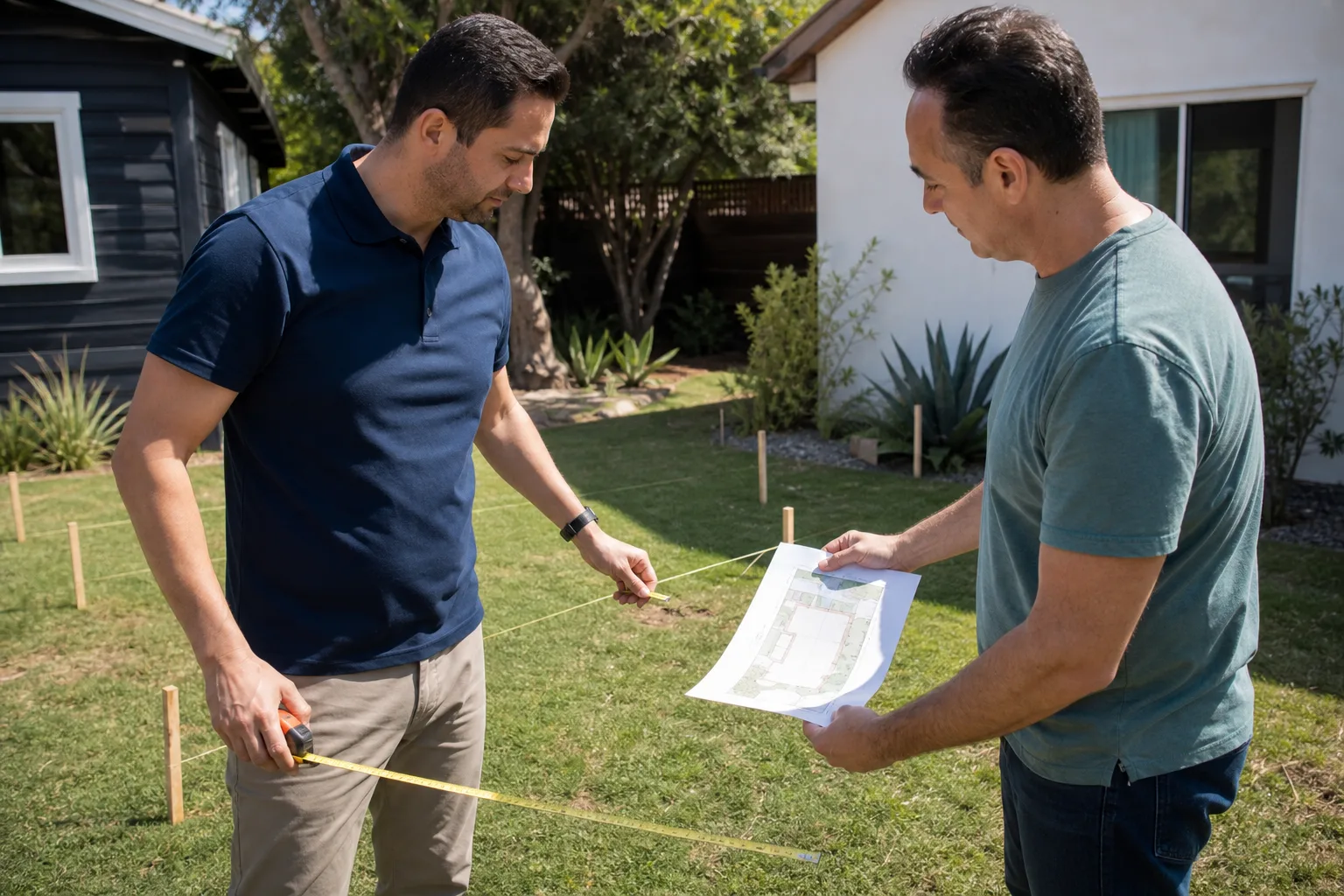
Site visit and Hardie assessment. We inspect the existing cladding, framing at the tie-in, and roofline. We document everything in writing, including the condition of the existing Hardie boards we’ll need to match.
- 3
Written estimate with line items. You get a fixed price before any work starts. That includes the siding, the framing, the flashing, the paint match, and the permit coordination. No allowances, no “we’ll see what we find.”
- 4
Parts and materials decision. For Hardie products, we almost always spec OEM HardiePlank and HardieTrim to keep the warranty clean. For incidental materials like sealants and flashing, we use brands we’ve verified over years of Orange County coastal exposure.
- 5
Build and tie-in. The addition goes up, the Hardie goes on, and the transitions get the same attention as the new walls. We prime every field cut, flash every intersection, and gap every joint to manufacturer spec.
- 6
Final walkthrough and the 365-Day Done Right Promise. We walk the project with you, note anything that needs attention, and hand you the written guarantee: if the work isn’t right within one full year, we make it right. No haggling.
What James Hardie Room Addition Contractor Costs in Orange County
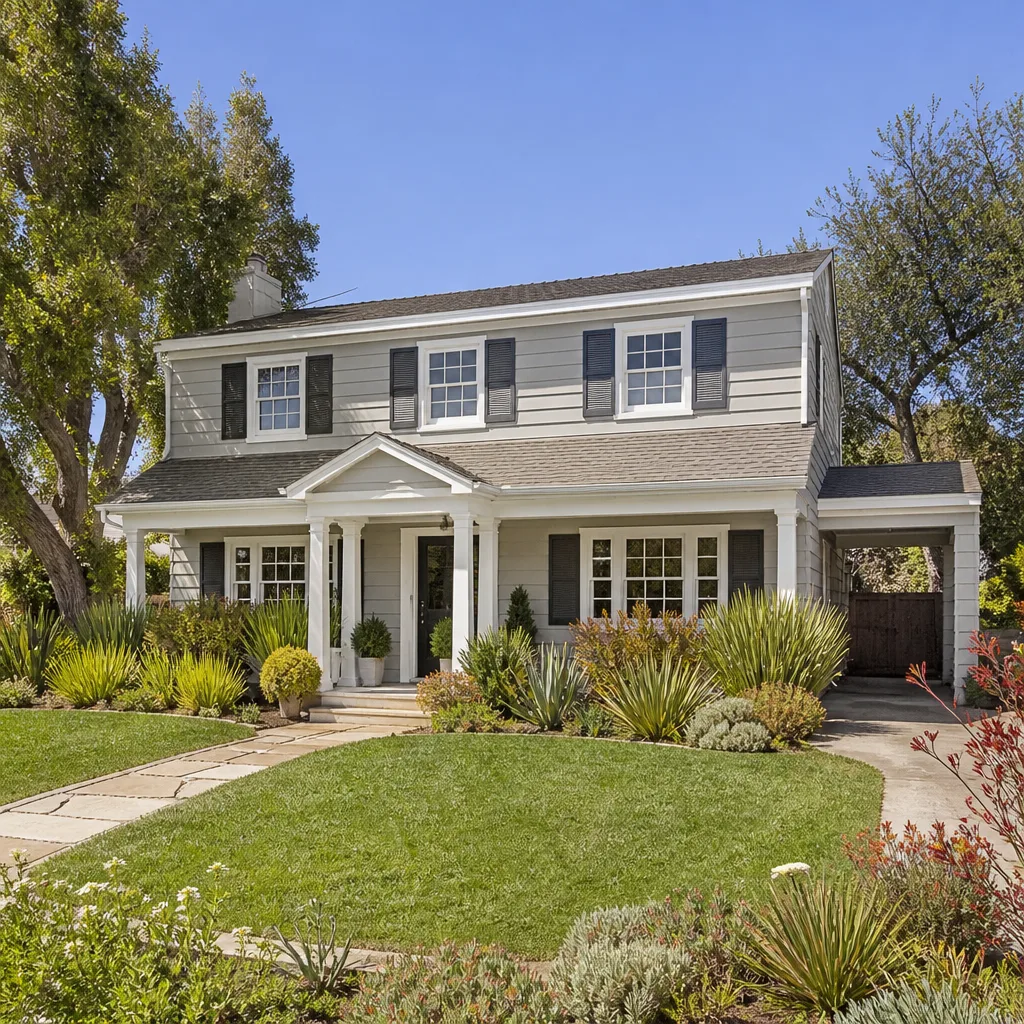
Here’s what we’re quoting for Hardie-clad room additions across Orange County right now:
- Interior room addition with no exterior Hardie work: $260 – $340 per square foot, depending on finish level and whether a bathroom is involved.
- Room addition with HardiePlank lap siding and HardieTrim to match existing: $310 – $390 per square foot, with the siding portion running $9 – $14 per square foot of wall area.
- Second-story addition over a garage with full Hardie re-clad: $350 – $420 per square foot. The framing and engineering drive this number more than the siding, but the re-clad adds roughly $18,000 – $26,000 on a typical 400-square-foot footprint.
- Hardie touch-up and tie-in only (no new framing): $4,200 – $9,500 depending on how much existing siding needs to be pulled and reset.
What moves the price: the condition of your existing Hardie installation, whether the roofline can be extended cleanly or needs re-engineering, and whether your city requires architectural review. Coastal cities like Laguna Beach and Newport Beach have stricter design standards, and that adds plan-check time but not much material cost. Call (350) 209-9049 for a written number on your specific addition.
Why Orange County Homeowners Call Sutton ADU Orange County for James Hardie Work
Miles Hartwell grew up in the San Gabriel Valley helping his uncle frame additions on weekends, and he’s spent the years since turning that early education into a proper trade at Los Angeles Trade-Technical College and then nearly two decades in the field. His crew has run detached garage conversions and room additions across Orange County, including a stretch of projects near Anaheim Hills he’s particularly proud of. The common thread on every job: the client calls back on the second project because the first one went the way Miles said it would.
Every Sutton ADU Orange County project runs under the Threshold Standard: a written price before work begins, a 365-Day Done Right Promise covering workmanship for a full year, and a free second visit if any element fails. Every technician who shows up at your door is background-checked, identity-verified, uniformed, and photo-badged, and their name and photo come to you before they arrive. If your James Hardie project has us recommending a different route, like a prefab ADU line from Abodu, Cover, or Dvele, we’ll say so plainly. The goal is the right build for your lot, not the build we happen to sell.
FAQs
No, but it depends on the installer. James Hardie’s warranty covers the product, not the installation, and any addition that ties into existing Hardie siding has to be installed per the published installation guide for the warranty to stay intact. If a contractor cuts corners on gapping, flashing, or fastener spec, the warranty on the new work is compromised, and the original siding warranty may be affected at the tie-in point. We install to Hardie’s printed specs, not to the way we’ve always done it.
We can match the color closely with the manufacturer’s touch-up paint or a custom match from a local Orange County paint supplier, but a perfect match depends on how much the existing siding has faded. In sunny inland areas like Irvine and Mission Viejo, Hardie ColorPlus finishes fade more quickly than the raw primed boards. If your existing siding is more than five years old, we’ll tell you honestly whether a small repaint of the affected wall is worth doing with the addition. Call (350) 209-9049 and we’ll look at it in person.
Most room additions in Orange County with Hardie siding run 10 – 16 weeks, and the siding phase itself is the fastest part. Permits and plan check consume the first 3 – 6 weeks, framing runs 2 – 3 weeks, and the Hardie installation plus painting runs another 2 – 3 weeks. Coastal cities with design review boards, like Laguna Beach, add time to the front end. We’ll give you a schedule in writing as part of the estimate, and we’ll tell you now that the schedule is only as good as the city’s plan-check queue.
Yes, no question. Any room addition in Orange County requires a building permit, and any change to the exterior cladding requires plan review. We pull permits on every project, and we don’t do unpermitted additions. If a contractor tells you a permit isn’t needed, keep looking. The permit records also matter when you sell the house, because unpermitted square footage becomes a disclosure problem at escrow.
On a room addition, use OEM HardiePlank and HardieTrim. The product is competitively priced, the installation specs are clear, and the warranty chain stays unbroken. Aftermarket cement boards exist, but they don’t meet the same fire ratings and they don’t always match the texture and shadow line of existing Hardie siding. For fasteners, flashing, and sealants, we use brands we’ve verified over years of Orange County coastal exposure, but the boards themselves are always James Hardie. Call (350) 209-9049 for an exact quote on your addition.
Written by Miles Hartwell, Owner, Sutton ADU Orange County at Sutton ADU Orange County, serving Orange County and nearby areas.