Tuff Shed Site Prep & Utilities: The Orange County Owner’s Guide
Site prep and utility work for a Tuff Shed conversion in Orange County typically runs $8,000 – $28,000 depending on what the shed needs to become livable: grading, concrete, electrical, plumbing, or all of it. We stock and install the components Tuff Shed owners ask for most: panel-ready electrical kits, sub-panel feeds, trenching for water and drain lines, and foundation anchors rated for southern California soil conditions. Most owners discover this work is needed the day they call a city planner or an electrician and hear the words “permit” and “setback” in the same sentence.
We’re an independent service provider, not affiliated with Tuff Shed. But we’ve done enough of these conversions to know exactly what their structures require, what Orange County cities ask for on plan check, and what fails first when someone tries to skip the prep work.
Key Takeaways
- Budget reality: A bare electrical feed starts near $8,000. Full plumbing plus electrical plus hardscape runs $20,000+. Ask for a written price before anyone breaks ground.
- The part that fails most often: Undersized or improperly trenched electrical conduit, followed by foundation pads poured without rebar or a vapor barrier.
- Compatibility gotcha: Tuff Shed floor systems sit on pressure-treated skids, not a standard slab anchor pattern. You need a site prep plan that accounts for that before concrete gets poured.
- If you call us: We send a written scope and price, plus the name and photo of the technician before arrival. Every time.
Which Tuff Shed Models This Applies To
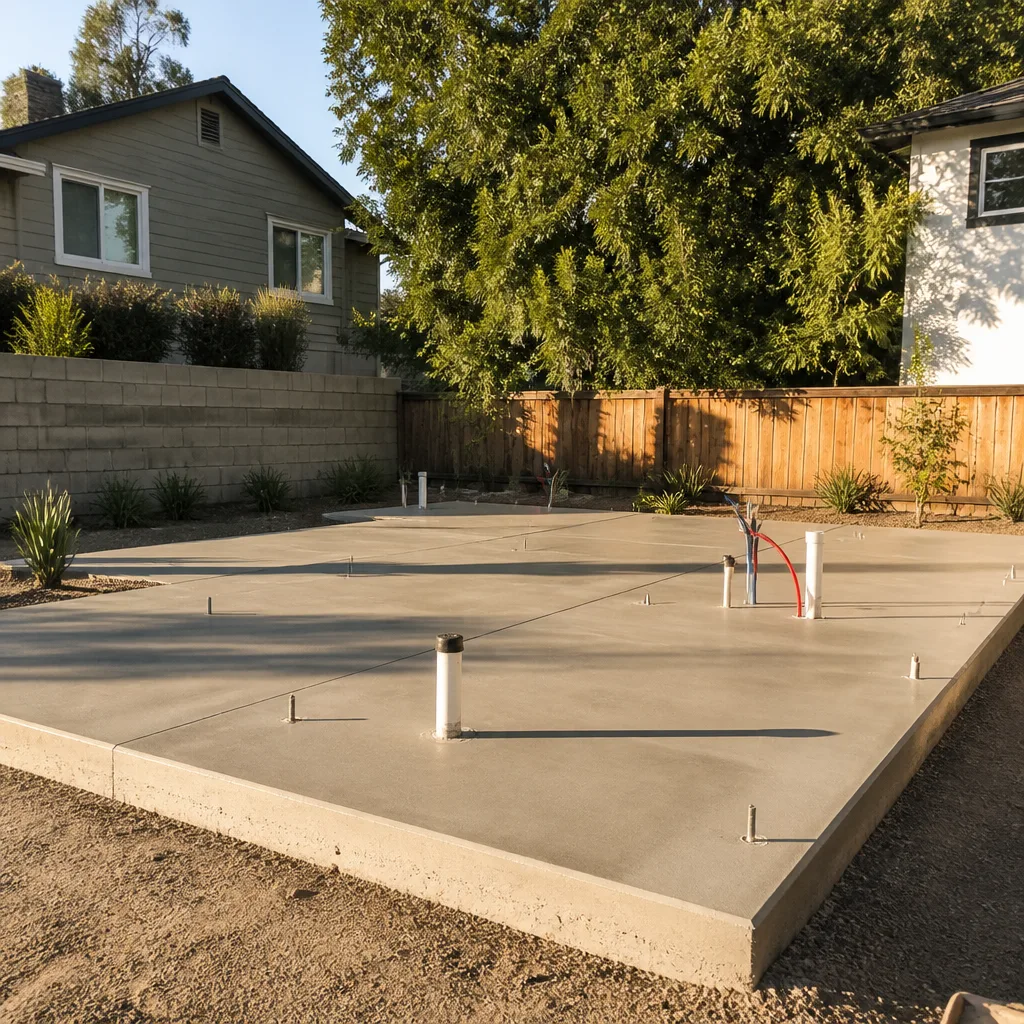
We handle site prep and utility runs for every Tuff Shed line commonly sold in Orange County: the Premier Pro series, the Premier Ranch, and the Sundance Tuff Shed. What matters more than the model name is what you plan to do with the structure. A storage shed needs almost nothing: a graded pad, maybe four inches of gravel, done. A shed you plan to live or work in (which is where Tuff Sheds get interesting in California) needs a different level of prep entirely, and that’s where most of our calls come from.
OEM versus aftermarket matters less here than it does with framing hardware. Tuff Shed doesn’t manufacture electrical panels, water line, or concrete anchors. Those come from standard suppliers: Square D, Eaton, Leviton for electrical; PEX or copper for supply lines; ABS for drain work. What we stock on the truck are the Tuff Shed-specific components: floor skirt anchors sized for their 2×4 and 2×6 floor systems, crawl space access panels, and weather-resistant entry thresholds that match the Premier and Ranch line dimensions. One compatibility gotcha: Tuff Shed’s Premier Pro series uses floor joists spaced 16 inches on center, but the smaller Sundance line can vary. If you’re adding a sub-panel or running conduit under the floor, measure the actual joist spacing before you buy anything. We check it during the estimate.
Signs Your Tuff Shed Site Prep & Utilities Is Failing
- Water pooling at the shed base after rain. This means the pad wasn’t graded with enough slope, or the gravel base has settled and lost its crown. In Orange County, where we get heavy but infrequent rain, this tends to show up the first winter after installation.
- Flickering lights or a tripped breaker when you run a space heater. The most common cause we find is undersized wire run from the house panel to the shed sub-panel. A 14-gauge run that’s fine for a single light fixture will not handle a 1,500-watt heater.
- Condensation on the interior wall surface near the floor. No vapor barrier under the slab or under the floor system means moisture wicks up from the ground. In coastal Orange County cities like Huntington Beach or Newport Beach, the humidity makes this worse.
- Doors that stick or don’t latch cleanly anymore. The shed has shifted. Usually the pad settled unevenly or the original anchors weren’t set into concrete, just driven into raw soil.
- Rust or corrosion at the anchor points or the bottom plate. If the shed was set directly on soil or on a pad that traps water against the wood, the bottom plate rusts or rots within a few seasons.
Replacement Cost & What’s Included
Here’s what we quote in Orange County, in real numbers, based on the jobs we’ve done recently.
| Scope of Work | Typical Installed Range | What’s Included |
|---|---|---|
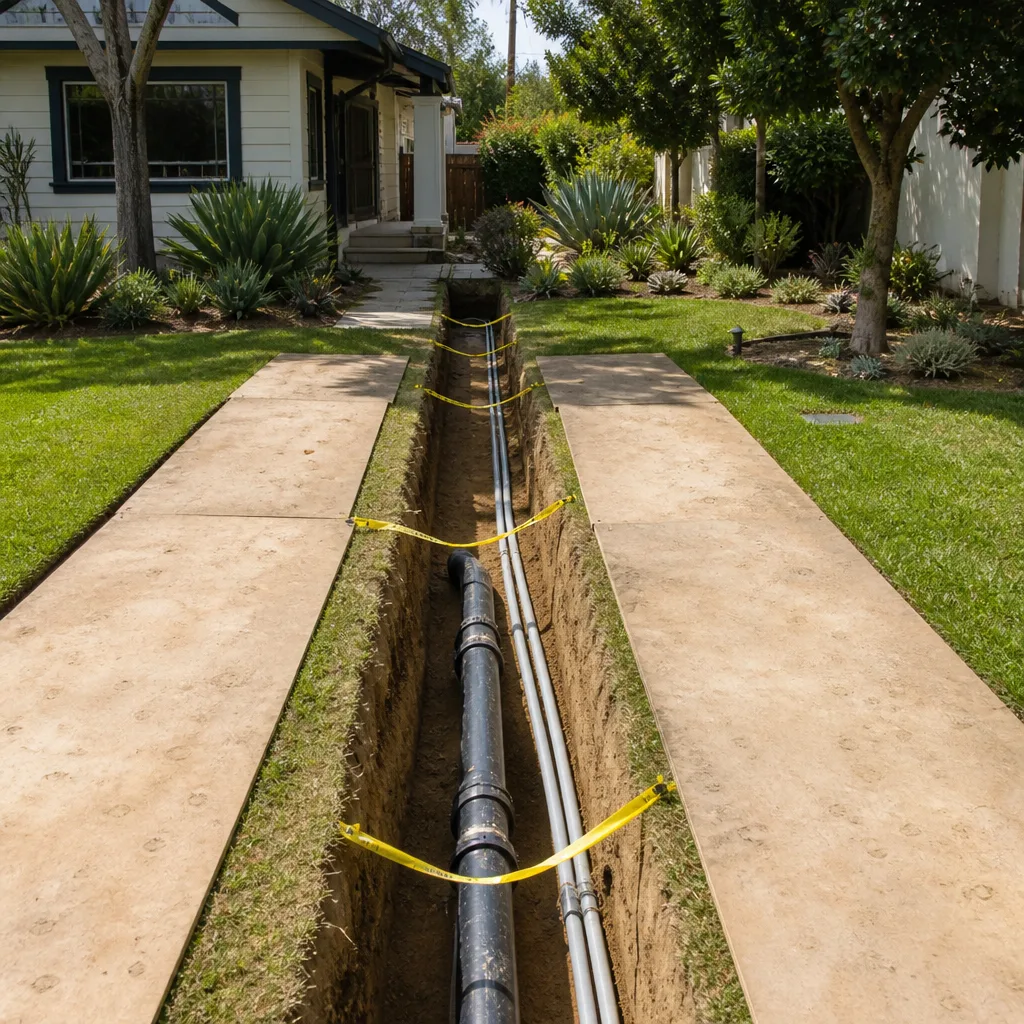
| Basic electrical feed (single 20A circuit, <75 ft run) | $8,000 – $12,000 | Trenching, conduit, sub-panel or junction, permit-ready drawings, city inspection coordination |
| Standard shed-to-ADU electrical (100A sub-panel) | $14,000 – $20,000 | Panel, breakers, grounding, feeder run, permits, inspections |
| Full site prep plus utilities (grading, compacted base, electrical, water, drain) | $22,000 – $28,000 | Demolition/clearance, grading, base, all utility runs, permit set, inspection scheduling |
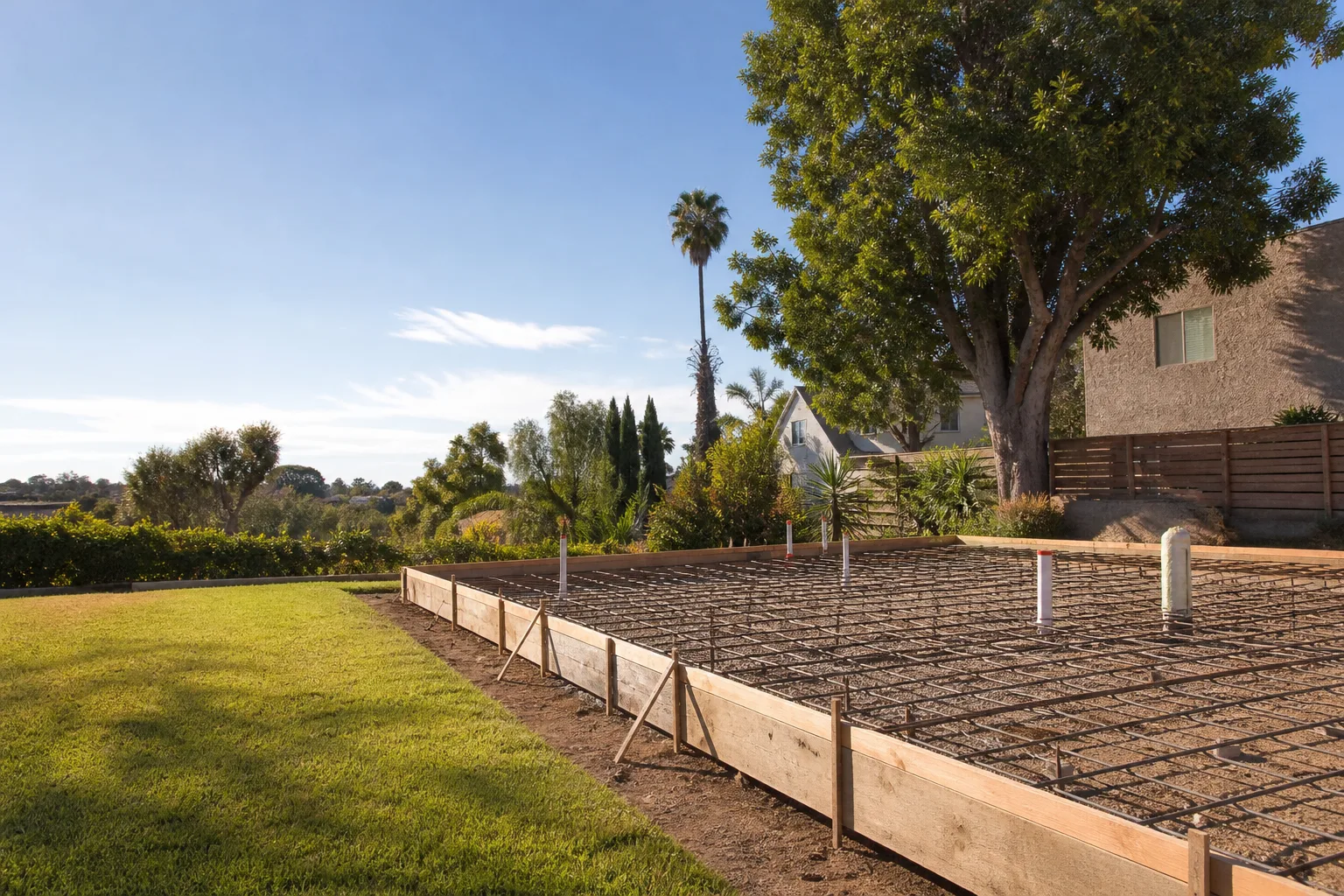
| Concrete pad only (10×12 to 12×20, reinforced, vapor barrier) | $5,000 – $9,000 | Form work, rebar, 4″ slab, vapor barrier, anchor bolts placed to Tuff Shed floor plan |
The range exists because soil conditions, distance from the house panel, and which Orange County municipality you’re in all move the number. What doesn’t move: we give you a written price before work starts, and the 365-Day Done Right Promise covers defects in workmanship for one full calendar year from project completion. If a settlement crack appears or a conduit pulls loose, we come back. No haggling. That’s the Threshold Standard, and it’s stamped on every project we do.
DIY or Call Us?
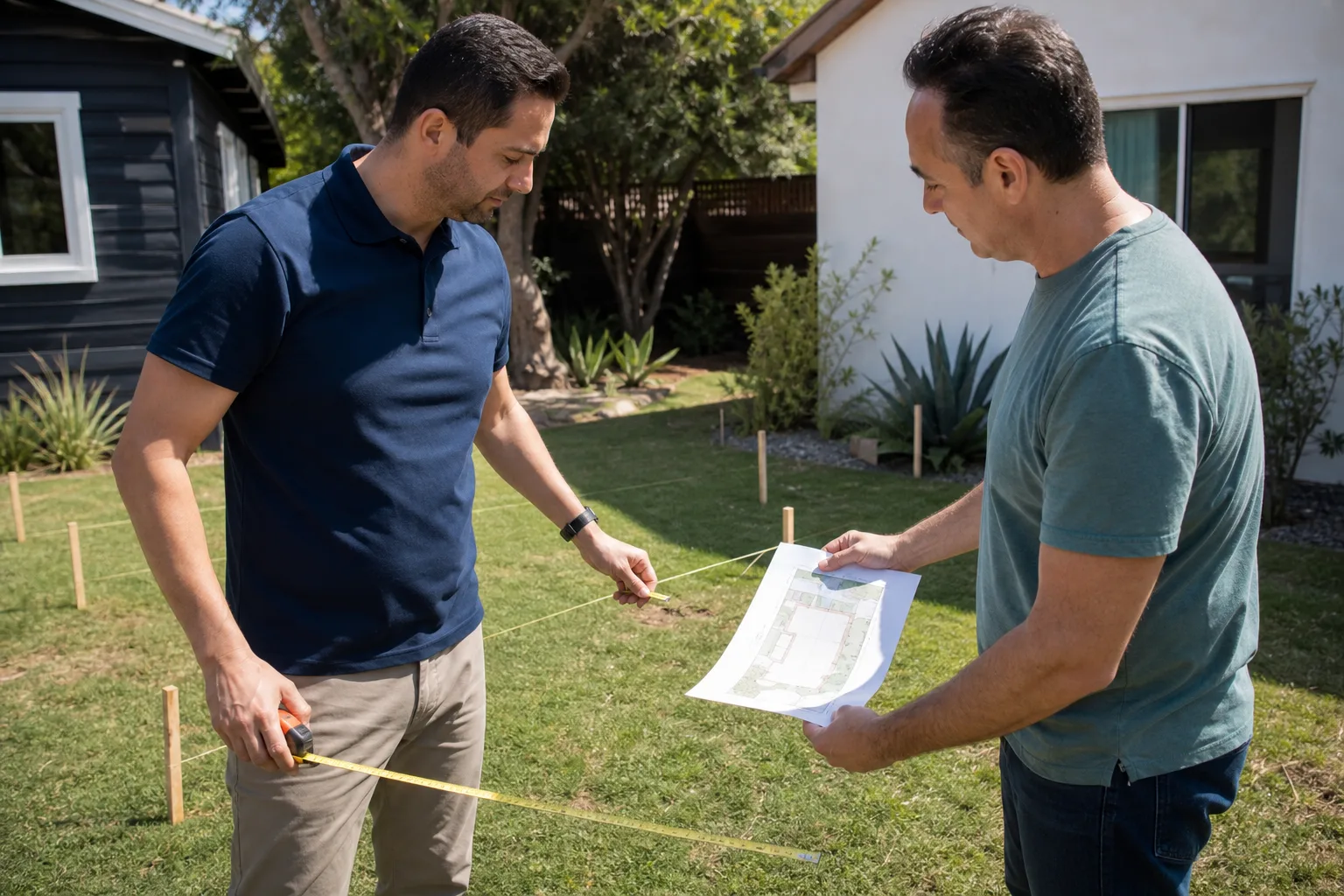
You can safely handle the nuisance items yourself: clearing vegetation, checking for visible settlement, marking where you think the structure should sit. You can also gather the information we’ll need: your Tuff Shed’s floor plan drawing if you still have it, a photo of the existing panel, and a rough sketch of the run to the house.
What you should not do yourself: anything involving trenching near the property line, opening the main electrical panel, or touching gas or water supply lines. Utility locates (Dial 811 before you dig) are free, but hitting an unmarked line is not. Even with the locate, trenching near a main gas line is a job for a trained crew with a licensed electrical or plumbing contractor. The risk isn’t theoretical: we’ve trenched on Orange County properties where the gas main was four inches from where the old owner thought it was. If you want an honest look at what your shed needs, call (350) 209-9049. We’ll send you a written plan and price, and the name of the person who’ll show up at your door.
FAQs
Properly done site prep (compacted base, reinforced concrete pad, vapor barrier) lasts 30+ years in Orange County’s climate. Electrical and plumbing runs last the life of the structure if the wire gauge and pipe material were correctly sized at the start. The failure points we see after 10 – 15 years are almost always from shortcuts during the original prep: no vapor barrier, undersized wire, or a pad poured without rebar. Call (350) 209-9049 if you want us to inspect what you have.
Small settlement cracks can often be stabilized with polyurethane injection. But if the pad has dropped more than half an inch or cracked across a load-bearing line, the long-term fix is usually a new reinforced pad. That’s what we’d tell you even if it meant losing the job. It’s cheaper to do it right once than to patch it twice and still replace it. Call (350) 209-9049 for an assessment, and we’ll tell you which situation you’re in.
A basic electrical feed takes 2 – 3 working days in most Orange County cities, not counting the permit wait at plan check, which runs anywhere from one to four weeks depending on the city. Full site prep plus utilities typically runs 5 – 8 working days. We’ll give you a schedule with your written estimate, and we’ll tell you which city departments in Orange County tend to drag. Some do.
We keep the common components on the truck: conduit, wire rolls, sub-panel kits, anchor bolts, and water line fittings sized for Tuff Shed floor systems. We also carry panel-ready electrical kits for Abodu, Cover, and Dvele builds for when Tuff Shed owners upgrade to a full ADU. Anything specialized gets ordered before the job starts, and the price is in the written quote before work begins. One phone call to (350) 209-9049 gets you a clear answer on what’s in stock and what’s a week out.
Written by Miles Hartwell, Owner, Sutton ADU Orange County at Sutton ADU Orange County, serving Orange County and nearby areas. Miles grew up in the San Gabriel Valley framing additions with his uncle on weekends, trained at Los Angeles Trade-Technical College, and has spent two decades running ADU and site work crews across Orange County. Tell me what you need the space to do, and we’ll figure out the right way to build it.